
Featured image for Dades Valley Morocco landscape
Image source: marrakech-desert-trips.com
The Marrakech to Dades Valley 1 day tour is one of Morocco’s most spectacular single-day adventures, packing dramatic mountain passes, ancient kasbahs, and rose-scented valleys into just 8-10 hours of travel. This iconic route crosses the High Atlas Mountains via the breathtaking Tizi n’Tichka pass (2,260m), winds through the UNESCO-listed Ait Ben Haddou, and finishes in the jaw-dropping Dades Valley, where rust-red rock formations tower over Berber villages. Perfect for travelers short on time, this tour delivers the essence of southern Morocco in one unforgettable day.
Picture this: you wake up before sunrise in the bustling medina of Marrakech, the call to prayer echoing over the rooftops. By 7 AM, you’re climbing into a comfortable 4×4 vehicle, and by 9:30 AM, you’re standing on top of the world at a mountain pass higher than any peak in the Alps. By sunset, you’ve watched the shadows stretch across a valley so dramatic it looks like another planet.
That’s the magic of the Marrakech to Dades Valley 1 day tour. It’s the perfect taste of southern Morocco for travelers who can’t spare more than a day, but want to see the absolute best of what lies beyond the Atlas Mountains. Think of it as Morocco’s greatest hits album: Atlas Mountain passes, ancient kasbahs, movie-famous villages, rose valleys, and canyon landscapes that will leave your jaw on the floor.
What makes this tour truly special is the sheer variety packed into a single day. In just one journey, you cross snow-capped mountain ranges, visit a UNESCO World Heritage Site, drive through Hollywood film sets, wander through Berber souks, and end up in one of the most photogenic valleys on Earth. It’s the kind of day that turns a regular vacation into a story you’ll be telling for years.
Key Takeaways
- Scenic Mountain Crossing: The Tizi n’Tichka pass reaches 2,260 meters (7,415 feet) and is the highest major mountain pass in North Africa.
- Cultural Heritage: You’ll visit Ait Ben Haddou, a UNESCO World Heritage Site since 1987 and filming location for over 20 Hollywood movies.
- Distance Covered: The total journey is roughly 330 km (205 miles) one way, taking 8-10 hours including stops.
- Best Travel Season: October through April offers the most comfortable temperatures for this long day of travel.
- Berber Encounters: The route passes through traditional Amazigh (Berber) villages where ancient customs remain part of daily life.
- Photo Opportunities: The Dades Valley’s “Monkey Fingers” rock formations and the Valley of Roses provide some of Morocco’s most Instagram-worthy views.
- Early Start Required: Most tours depart Marrakech between 6:30-7:30 AM to maximize sightseeing time.
📑 Table of Contents
Why Choose a One-Day Tour from Marrakech to Dades Valley?
Let’s be honest. Morocco has so much to see that planning a trip can feel overwhelming. You could easily spend two weeks exploring the country and still not see it all. But here’s the thing: not everyone has two weeks. Many travelers are visiting Morocco as part of a larger trip, or only have a few days in Marrakech. That’s where this 1 day tour becomes a game-changer.
Think of it like trying a sampler platter at a restaurant. You get to taste the best dishes without committing to a full meal. The Dades Valley tour does exactly that, offering a curated experience that hits all the highlights of southern Morocco’s most stunning landscapes and cultural treasures.
The “Time Poor, Experience Rich” Traveler’s Dream
If you’re like most modern travelers, you probably have limited vacation days but maximum wanderlust. A one-day tour solves this beautifully. You wake up in Marrakech, sleep in the same bed that night, but feel like you’ve traveled to a completely different world, because you have.
According to the Moroccan Ministry of Tourism, over 13 million tourists visited Morocco in 2023, with day trips from Marrakech ranking among the top three most-booked experiences. There’s a reason this tour is so popular: it delivers maximum impact for minimum time investment.
Cost-Effective Adventure
Here’s a fun way to think about it: imagine trying to visit the Grand Canyon, a medieval castle, a mountain ski resort, and a Hollywood film set all in one day. Impossible, right? But in Morocco, you can do the equivalent for a fraction of the cost of similar experiences in Europe or North America. A one-day tour typically costs between €50-€90 per person, including transport, guide, and sometimes lunch. Try getting that value in Tuscany.
Perfect for First-Time Visitors
If this is your first trip to Morocco, the Marrakech to Dades Valley tour is like a highlights reel. You’ll experience the dramatic landscapes, meet local Berber communities, and understand why this region has captivated travelers for centuries. It’s an excellent foundation before deciding where to return for longer stays.
The Complete Route: What You’ll See Hour by Hour
Let’s break down exactly what happens on this epic day. Knowing the route helps you prepare mentally and physically for the adventure ahead. Think of this as your roadmap to the perfect day out.
Visual guide about Dades Valley Morocco landscape
Image source: marrakech-desert-trips.com
6:30 AM – 7:30 AM: Early Morning Departure from Marrakech
Your day starts early, and there’s a good reason for that. The earlier you leave Marrakech, the more time you have at each stop, and the better the lighting for photos. Most tours pick you up from your hotel or riad between 6:30 and 7:30 AM.
Did You Know? Marrakech sits at 466 meters (1,529 feet) above sea level, while the Tizi n’Tichka pass rises to 2,260 meters. That means you’ll gain nearly 1,800 meters of elevation in about 2.5 hours, similar to driving from sea level to a mountain ski village in the Alps.
Pickup is usually from your accommodation in the medina or Gueliz (the modern district). Your driver-guide will typically speak English, French, and Arabic, and often Berber too. They’ll provide a quick briefing about the day ahead and answer any questions you have.
7:30 AM – 10:00 AM: Crossing the High Atlas Mountains
This is where the magic begins. As you leave Marrakech’s ochre-colored buildings behind, the landscape transforms quickly. Suburban neighborhoods give way to olive groves, then to increasingly dramatic mountain terrain. The road begins to wind, and suddenly you’re in another world entirely.
The Tizi n’Tichka pass is the star of the show. “Tizi” means “pass” in the Berber language, and “Tichka” refers to the difficult terrain. The name itself tells you this is no ordinary mountain road. Built by the French in the 1920s, this engineering marvel snakes through the High Atlas range, the same mountains that have sheltered Berber communities for thousands of years.
At the summit, you’ll stop for photos. On clear days, you can see for miles in every direction, with snow-capped peaks stretching to the horizon. The air is noticeably cooler and crisper. Your guide will likely point out specific peaks and share stories about the mountains’ significance in Berber culture.
10:00 AM – 11:30 AM: Ait Ben Haddou – The UNESCO Treasure
As you descend from the pass, your first major stop awaits: the legendary ksar (fortified village) of Ait Ben Haddou. This place is so special that UNESCO designated it a World Heritage Site in 1987, and it has served as a backdrop for Hollywood blockbusters including Gladiator, Lawrence of Arabia, The Mummy, and Game of Thrones.
Imagine a medieval village made entirely of earthen clay, rising like a sandcastle from the riverbank. That’s Ait Ben Haddou. The buildings are constructed from rammed earth, straw, and clay, a building technique that has remained virtually unchanged for centuries. Walk across the river to enter the village, climb through narrow passages, and explore the rooms where Berber families once lived and traded.
Local guides (separate from your main guide) offer tours for around 20-30 MAD (€2-3), and they’re worth every dirham. These guides grew up in the area and know every corner of the ksar, including secret viewpoints and the best spots for photos.
Travel Tip: Wear comfortable shoes with good grip. The clay steps can be slippery, especially if there’s been recent rain. And don’t forget to bring a scarf or hat, as there’s little shade inside the village.
11:30 AM – 12:30 PM: Ouarzazate – The “Hollywood of Africa”
Just 30 minutes from Ait Ben Haddou lies Ouarzazate, a city that proudly calls itself the “Gateway to the Sahara” and the “Hollywood of Africa.” This is where many famous films were actually produced, and you’ll see the famous Atlas Film Studios (though they’re not always included in day tours).
Ouarzazate is also home to the impressive Taourirt Kasbah, once the residence of the powerful Glaoui family who controlled much of southern Morocco in the 19th and 20th centuries. The kasbah’s towering walls and intricate decorations offer a glimpse into the lavish lifestyle of Morocco’s former feudal lords.
Lunch is typically in Ouarzazate, giving you a chance to sample authentic Berber cuisine. Tagines (slow-cooked stews named after the conical clay pots they’re cooked in) and couscous are the stars here. Most tour operators include lunch in the package, but always confirm when booking.
12:30 PM – 2:00 PM: The Valley of Roses
After lunch, the journey continues toward the Dades Valley, with a stop at one of Morocco’s most fragrant destinations: the Valley of Roses. From mid-March to mid-May, this valley bursts into bloom with thousands of Damascus roses, filling the air with an intoxicating perfume.
Even outside bloom season, the valley is beautiful, with green terraces climbing the hillsides and small cooperatives producing rose water, rose oil, and rose-based cosmetics. The town of Kalaat M’Gouna serves as the main hub, and you’ll find shops selling rose products at very reasonable prices.
Did You Know? It takes approximately 3,000 kg of rose petals to produce just 1 kg of rose oil, making it one of the most expensive essential oils in the world. Moroccan rose oil is prized by perfumers from Paris to Dubai.
2:00 PM – 4:00 PM: The Dades Valley – Nature’s Masterpiece
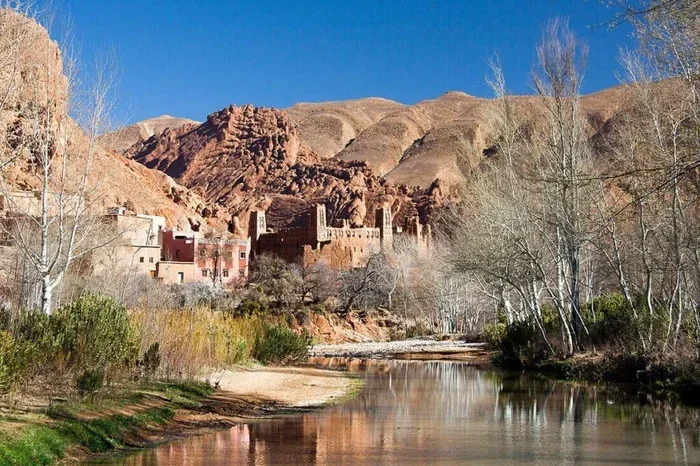
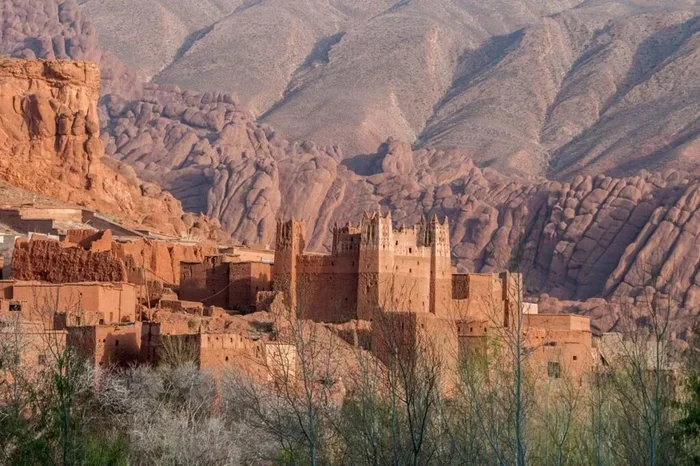
Finally, you arrive at the crown jewel of the tour: the Dades Valley itself. This is where your phone’s camera will work overtime. The valley is famous for its dramatic rock formations, particularly the “Monkey Fingers” (Doigt de Singe), tall pillars of weathered rock that look like, well, monkey fingers reaching toward the sky.
The Dades Gorge cuts through the landscape, with the road snaking alongside towering red cliffs. You’ll make stops at panoramic viewpoints where the entire valley spreads out before you like a painted tapestry. The contrast between the rust-red rocks, green oases, and blue sky is genuinely stunning.
Some tours include a walk through the gorge, which is a great option if you have the time and energy. The walk is relatively easy, taking you through the valley bottom where Berber families farm small plots of land and tend to their animals.
4:00 PM – 8:00 PM: The Return Journey
After exploring the Dades Valley, it’s time to head back to Marrakech. The return journey follows a slightly different route for part of the way, often passing through the town of Tinghir (famous for its palm groves) and sometimes taking the “Road of a Thousand Kasbahs” toward the Draa Valley.
The drive back is your chance to relax, process what you’ve seen, and maybe catch a sunset over the Atlas Mountains. Most tours arrive back in Marrakech between 7:00 and 8:00 PM, perfect for finding dinner at one of the city’s famous restaurants or rooftop bars.
Practical Tips for Your Dades Valley Day Tour
Now that you know what to expect, let’s talk about how to make the most of this incredible day. These practical tips come from years of experience helping travelers have the best possible time in Morocco.
What to Pack
Packing smart is essential for a long day of travel. Here’s your essential checklist:
- Comfortable walking shoes with good grip (you’ll thank yourself at Ait Ben Haddou)
- Layers of clothing – mornings can be cool at altitude, but afternoons warm up significantly
- Sunscreen and sunglasses – the Moroccan sun is stronger than you might think
- A scarf or pashmina – useful for sun protection, dust, and visiting religious sites
- Camera with extra battery – you’ll be taking more photos than you expect
- Water bottle – stay hydrated, especially at altitude
- Small backpack – for carrying essentials during stops
- Cash in small denominations – for tips, souvenirs, and local guides
Best Time of Year to Go
Timing can make or break your experience. The best months for this tour are October through April, when temperatures are mild and comfortable. Summer months (June-August) can be brutally hot, especially in the valleys where temperatures regularly exceed 40°C (104°F).
Spring (March-May) is particularly magical if you want to see the Valley of Roses in bloom. Autumn (September-November) offers stable weather and beautiful light for photography. Winter brings occasional snow to the Atlas passes, which can occasionally cause road closures, but also creates stunning winter landscapes.
Choosing the Right Tour Operator
Not all tour operators are created equal. Here are the key factors to consider:
- Group size: Smaller groups (4-8 people) offer a more personalized experience than large buses (15+ people)
- Vehicle quality: Modern, air-conditioned 4×4 vehicles make a huge difference on this long day
- Guide quality: Look for operators with licensed, English-speaking guides who know the region well
- Reviews: Check TripAdvisor, Google Reviews, and booking platforms for recent feedback
- Inclusions: Clarify what’s included (lunch, entrance fees, local guides) and what’s extra
- Cancellation policy: Flexible booking options are always preferable
Reputable operators like GetYourGuide, Viator, and local companies such as Marrakech Desert Trips or Morocco Desert Tours consistently receive excellent reviews for this specific route.
Budget Considerations
One-day tour prices typically range from €50-€90 per person, depending on the operator, group size, and inclusions. Here’s what’s usually included and what’s not:
Typically Included:
- Hotel pickup and drop-off
- Transportation in air-conditioned vehicle
- English-speaking driver/guide
- Lunch at a local restaurant
- Fuel and road tolls
Usually Extra:
- Entrance fees to Ait Ben Haddou (around 10 MAD)
- Local guide at Ait Ben Haddou (20-30 MAD)
- Drinks and snacks
- Tips for driver and guide (100-150 MAD is standard)
- Personal shopping and souvenirs
Cultural Insights: Understanding the Berber Heritage
This tour isn’t just about stunning landscapes, it’s also a journey through one of North Africa’s most fascinating cultures. The Berber people (who call themselves Amazigh, meaning “free people”) have inhabited this region for over 4,000 years, making them older than any of the Arab, Roman, or French influences that followed.
As you travel through the High Atlas and the valleys beyond, you’re passing through the heartland of Berber Morocco. The signs are everywhere, in the language (you’ll hear Tachelhit or Tamazight spoken alongside Arabic), in the architecture (kasbahs and ksour built in distinctive styles), in the cuisine (tagines and couscous prepared with regional variations), and in the warm hospitality you’ll encounter at every stop.
The Art of Berber Hospitality
If you visit a local home or shop, you’ll likely be offered mint tea. This isn’t just a drink, it’s a ritual. The preparation involves fresh mint, green tea, and sugar, poured from a height to create a foam on top. Accepting the tea is accepting friendship. Refusing it, while not offensive, misses an important cultural moment.
Did You Know? Morocco has over 17 recognized Amazigh (Berber) cultural events throughout the year, with the most famous being the Rose Festival in Kalaat M’Gouna each May, celebrating the rose harvest with music, dancing, and traditional costumes.
Respectful Tourism Practices
As a visitor, you have the opportunity to be a positive force in the communities you visit. Here are some simple ways to practice responsible tourism:
- Ask before photographing people – Many Berber communities are conservative, and unsolicited photos can feel intrusive
- Support local businesses – Buy crafts, food, and services from local providers rather than international chains
- Learn a few words – “Salaam alaikum” (peace be upon you) and “Shukran” (thank you) go a long way
- Dress modestly – Especially when visiting villages or religious sites
- Be patient with children – They may approach asking for pens, sweets, or money; it’s best to politely decline and avoid encouraging begging
What Makes This Tour Truly Unforgettable
After hearing all the logistics and practical information, you might be wondering: what is it really like? What makes this day stick in travelers’ memories long after they’ve returned home?
It’s the contrasts. It’s standing in a 12th-century kasbah in the morning and watching modern Berber teenagers take selfies in the afternoon. It’s feeling the cool mountain air on your face at 2,260 meters and then the warm desert wind in the valley below. It’s the color palette that shifts from the terracotta of Marrakech to the snow-white of the Atlas peaks to the rust-red of the Dades Gorge.
It’s the people. Your driver-guide, who has likely made this journey hundreds of times, still finds beauty in the changing light on the mountains. The local guide at Ait Ben Haddou, who grew up in a nearby village, sharing stories passed down through generations. The shopkeeper in the Valley of Roses, who insists you try three different types of rose water before you buy anything.
It’s the feeling of crossing a mountain range that has separated the Mediterranean world from the Sahara for millions of years, and emerging into a landscape that feels like the edge of the world. This isn’t a tour where you sit on a bus and watch scenery pass by. You’re part of the landscape, climbing ancient staircases, walking through gorges, breathing in the scent of roses.
Most of all, it’s the realization that Morocco isn’t just a country you visit, it’s an experience that stays with you. The Marrakech to Dades Valley 1 day tour is your gateway to that experience, a single day that captures the soul of southern Morocco.
Final Thoughts: Is This Tour Right for You?
The Marrakech to Dades Valley 1 day tour is perfect for travelers who want to maximize their experience in a limited time. It’s ideal for first-time visitors to Morocco, photography enthusiasts, culture lovers, and anyone who appreciates dramatic landscapes and authentic cultural encounters.
That said, it’s a long day. You’ll be on the move for 12-14 hours total, with significant time in a vehicle. If you have mobility issues, suffer from severe motion sickness, or prefer slow-paced travel, you might want to consider a two-day tour instead, which would allow you to spend a night in the Dades Valley and experience a Sahara sunset.
But if you’re ready for an adventure, if you want to see more of Morocco than most day-trippers ever will, and if you’re excited by the idea of crossing mountains, exploring ancient villages, and standing in valleys that have inspired poets and filmmakers alike, then this tour is calling your name.
Book it, pack your camera, charge your phone, and prepare for one of the most spectacular days of your travels. The Atlas Mountains are waiting, Ait Ben Haddou is ready to share its secrets, and the Dades Valley is eager to show you why travelers have been falling in love with Morocco for centuries.
Your adventure begins at sunrise in Marrakech. The rest is up to you.
Frequently Asked Questions
How long is the drive from Marrakech to Dades Valley?
The one-way drive takes approximately 5-6 hours, depending on stops and traffic. Including sightseeing breaks and lunch, the total tour duration is usually 12-14 hours from hotel pickup to hotel drop-off.
Is the Dades Valley day tour suitable for families with children?
Yes, this tour works well for families with children aged 5 and above. The variety of stops keeps kids engaged, though the long driving time can be challenging for very young children. Bring snacks, entertainment, and consider breaking up the journey with audiobooks or games.
What should I wear on the Marrakech to Dades Valley tour?
Dress in comfortable layers suitable for changing temperatures. Wear sturdy walking shoes for exploring kasbahs and gorges, and bring a light jacket for the mountain pass. Modest clothing is respectful when visiting local villages and religious sites.
Can I do this tour as a private excursion instead of a group tour?
Absolutely! Most tour operators offer private versions of this itinerary, which provide more flexibility on timing, stops, and pace. Private tours typically cost more but allow you to customize the experience and enjoy a more intimate journey.
What is the best month to visit Dades Valley from Marrakech?
October through April offers the most comfortable weather, with mild temperatures ideal for sightseeing. March to May is especially beautiful if you want to see the Valley of Roses in full bloom. Avoid July and August if possible, as temperatures can exceed 40°C (104°F).
Are meals included on the Dades Valley day tour?
Most tour packages include lunch at a local restaurant in Ouarzazate, typically featuring traditional Moroccan dishes like tagine or couscous. Breakfast and dinner are usually not included, and drinks are typically extra. Always confirm inclusions when booking your tour.