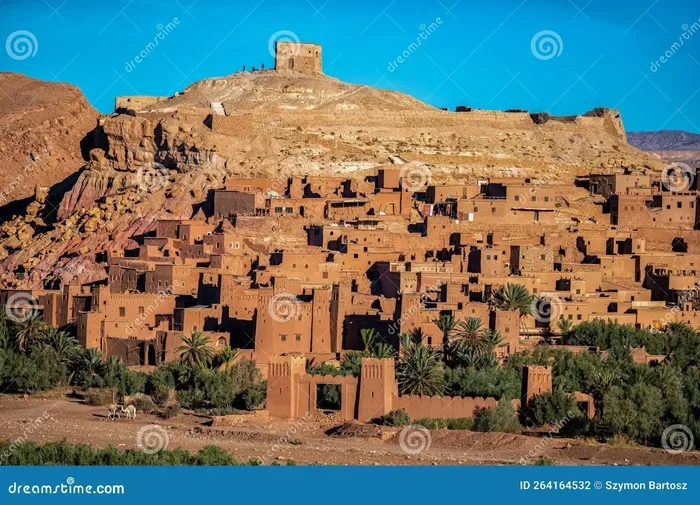
Featured image for Ouarzazate desert kasbah landscape
Image source: thumbs.dreamstime.com
A day trip from Marrakech to Ouarzazate is one of Morocco’s most rewarding single-day adventures, packing desert gateways, ancient kasbahs, and Hollywood film locations into roughly 12 hours of travel. Spanning about 200 miles through the High Atlas Mountains and across the Dadès River valley, this route crosses the breathtaking Tizi n’Tichka Pass at over 7,400 feet. Travelers get to walk through the same streets featured in Gladiator and Game of Thrones, all while enjoying traditional Berber culture and landscapes that feel like another planet.
Marrakech is one of those cities that pulls you in completely. The smell of spices, the hum of motorbikes, and the chatter of merchants all blend into a kind of organized chaos. But just a few hours beyond its ancient medina walls lies a road that many travelers call the most beautiful in all of North Africa. It leads south, over a mountain pass that seems to touch the clouds, and it ends in a dusty, sun-soaked city where Hollywood comes to make movies.
The road from Marrakech to Ouarzazate is not just a way to get from one place to another. It’s a story told in changing landscapes, weaving through cedar forests, Berber villages clinging to hillsides, and finally, into the kind of barren, rust-colored valleys that look like Mars. Along the way, you’ll pass through the Atlas Mountains, cross a pass higher than any mountain in the Alps, and stop at a mud-brick fortress that has appeared in more movies than most A-list actors.
This guide is designed to help you plan the perfect day trip, whether you’re a solo traveler, a couple, or a family with kids. We’ll cover the must-see stops, the best routes, what to eat, what to wear, and how to avoid the most common mistakes. By the end, you’ll have a clear picture of what to expect and feel ready to book your adventure with confidence.
Key Takeaways
- Total Distance: The journey covers roughly 320 km (200 miles) one way, with about 4-5 hours of driving each direction through mountain roads.
- Mountain Crossing: The Tizi n’Tichka Pass reaches 2,260 meters (7,415 feet), offering dramatic views but requiring careful driving, especially in winter.
- Ait Benhaddou Stop: This UNESCO World Heritage Site is the most popular stop, a 17th-century ksar that has starred in over 20 Hollywood films.
- Film Studio Capital: Ouarzazate hosts Atlas Studios and CLA Studios, where Lawrence of Arabia, Gladiator, and Kingdom of Heaven were filmed.
- Climate Variability: Marrakech averages 38°C in summer, while Ouarzazate can hit 42°C, making early morning departures essential.
- Best Travel Season: March-May and September-November offer the most comfortable temperatures and clearest mountain views.
- Budget Reality: Expect to pay between 600-1,200 MAD ($60-$120) for a private driver, depending on the season and group size.
📑 Table of Contents
Why Ouarzazate Is Worth the Long Drive
Let’s be honest. A day trip that requires five hours of driving each way is not a small commitment. So why do thousands of travelers make this journey every year? The answer lies in what waits at the other end, and along the way.
Ouarzazate is often called the “Door of the Sahara,” and for good reason. It sits at the meeting point of the Atlas Mountains, the Draa Valley, and the vast desert lands that stretch toward the Algerian border. The city itself is small, with a population of around 70,000, but its location makes it a launching pad for some of Morocco’s most iconic experiences.
What truly sets Ouarzazate apart, though, is its role in cinema. The city is the heart of Morocco’s film industry, earning it the nickname “Ouallywood.” Two major film studios, Atlas Studios and CLA Studios, are located here, and they have hosted productions like Gladiator, Lawrence of Arabia, Kingdom of Heaven, and parts of Game of Thrones. If you’ve ever watched a desert battle scene in a Hollywood blockbuster, there’s a good chance it was filmed right here.
Did You Know? Ouarzazate’s Atlas Studios is one of the largest film studios in the world, covering over 32,000 square meters. It’s so significant that the Moroccan government built a dedicated film commission here in 2011 to attract international productions.
The Historical Significance
Long before the cameras arrived, Ouarzazate was a strategic stop on the trans-Saharan caravan routes. Traders carrying gold, salt, and slaves would rest here before crossing the Atlas Mountains or continuing south into the desert. The city’s name comes from a Berber phrase meaning “without noise” or “the quiet one,” which reflects its peaceful desert setting.
Today, Ouarzazate remains a quiet city, but it’s anything but sleepy when it comes to tourism. It serves as the gateway to the Sahara Desert, the Todra Gorges, and the Draa Valley, making it a crucial hub for travelers exploring southern Morocco.
Planning the Perfect Day Trip: Routes and Logistics
The route from Marrakech to Ouarzazate is straightforward, but the terrain is anything but. Most travelers take the N9 highway, also known as the Route of a Thousand Kasbahs, which is the main artery connecting the two cities. This road winds through the High Atlas Mountains and crosses the famous Tizi n’Tichka Pass.
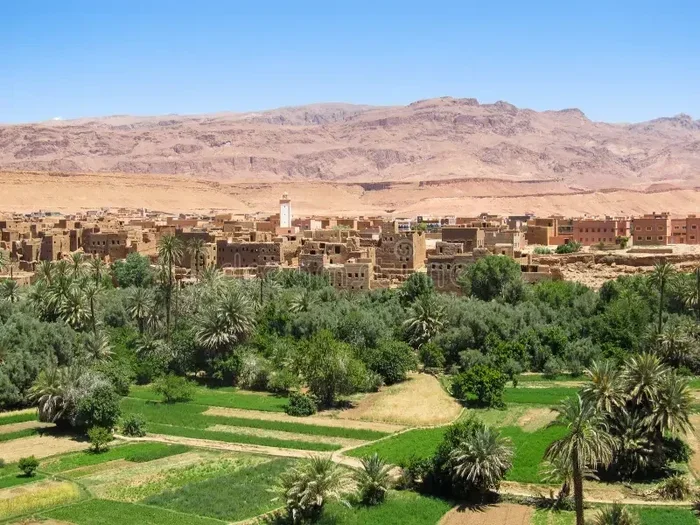
Visual guide about Ouarzazate desert kasbah landscape
Image source: thumbs.dreamstime.com
The Two Main Routes
Travelers essentially have two options for this trip. The first is the direct route via the Tizi n’Tichka Pass, which takes about 4 hours one way and covers roughly 320 km. This is the most popular and scenic option, offering dramatic mountain views and several photo stops along the way.
The second option is a longer, less-traveled route that goes through the Ait Bouguemez Valley and the M’Goun region. This route takes about 6-7 hours one way but rewards travelers with stunning views of fertile valleys, traditional Berber villages, and fewer tourists. However, this route is usually reserved for multi-day trips rather than day trips due to time constraints.
For a day trip, the Tizi n’Tichka route is the only realistic choice. The good news is that it’s also the more spectacular of the two, so you won’t feel like you’re missing out.
Transportation Options
You have three main ways to make this journey: hiring a private driver, joining a group tour, or renting a car. Each has its pros and cons.
Private Driver: This is the most popular option for day trips. A private driver knows the mountain roads intimately, can navigate the switchbacks safely, and will often stop at hidden viewpoints that aren’t in guidebooks. Expect to pay between 600-1,200 MAD ($60-$120) for a full-day trip, depending on the season and your negotiation skills. Most drivers will include the Ait Benhaddou stop, but you may need to negotiate film studio visits separately.
Group Tour: Organized tours are budget-friendly, often costing between 200-400 MAD ($20-$40) per person. However, they follow strict schedules, limit your time at each stop, and cram up to 15 people into a single van. They’re great for solo travelers or those on a tight budget, but they sacrifice flexibility.
Rental Car: Renting a car gives you complete freedom, but it’s not for the faint of heart. The Tizi n’Tichka Pass has over 100 switchbacks, and the road is shared with trucks, buses, donkeys, and pedestrians. If you’re not an experienced mountain driver, this option is best avoided. Rental cars cost around 300-500 MAD ($30-$50) per day, but you may want to pay extra for insurance that covers mountain roads.
Tip from Experience: If you decide to hire a driver, ask your hotel or riad to recommend one rather than booking online. Local drivers often charge less and know the area better. Also, agree on a price before getting in the car, and clarify whether fuel, lunch, and entry fees are included.
The Journey Through the High Atlas Mountains
The drive itself is one of the highlights of this trip, not just the destination. As you leave Marrakech behind, the city gives way to the plains of the Haouz region, where olive groves and grain fields stretch toward the foothills. Then, almost suddenly, the road begins to climb, and the Atlas Mountains rise up to greet you.
Crossing the Tizi n’Tichka Pass
The Tizi n’Tichka Pass is the highest point on the route, sitting at 2,260 meters (7,415 feet) above sea level. The word “Tichka” means “difficult mountain pass” in Berber, which gives you a clue about what to expect. The road features over 100 switchbacks, and the gradient can be steep, especially on the southern side.
As you climb, watch the landscape transform. The air gets cooler, the vegetation changes from arid scrubland to pine and cedar forests, and the views open up to reveal vast valleys below. On clear days, you can see all the way back to Marrakech and the snow-capped peaks of Mount Toubkal, North Africa’s highest mountain at 4,167 meters (13,671 feet).
Did You Know? The Tizi n’Tichka Pass is higher than any mountain pass in the European Alps, including the famous Col de l’Iseran in France, which reaches 2,770 meters but is less continuously steep.
The pass can be dangerous in winter, when snow and ice make the roads slippery. Several crashes occur each year, usually involving vehicles that aren’t equipped for mountain driving. If you’re traveling between December and February, check weather conditions before departing and consider hiring a 4×4 with an experienced driver.
Scenic Stops Along the Way
Most drivers will make a few stops along the mountain crossing, and you should encourage them to do so. Some of the best photo opportunities are:
- The Pass Itself: There’s a small viewpoint at the top of the pass where you can stretch your legs and take in the panoramic views.
- Berber Villages: Small settlements like Ijoukak and Oukaïmeden offer glimpses into traditional mountain life. You can see terraced fields, stone houses, and locals going about their daily routines.
- The Salt Valley: As you descend on the southern side, you’ll pass through a valley where local women sell rock salt and minerals. It’s a great place to pick up authentic souvenirs and support local communities.
Ait Benhaddou: The Star of the Show
About 30 km before Ouarzazate, you’ll arrive at Ait Benhaddou, the most famous stop on this route. This ancient ksar (fortified village) sits on a hillside along the former caravan route between the Sahara and Marrakech. It’s a stunning example of southern Moroccan architecture, with tall, decorative kasbahs and clay houses clustered within a defensive wall.
Why Ait Benhaddou Matters
Ait Benhaddou has been around since at least the 17th century, though some structures may be older. It was once a vital stop for traders carrying goods across the desert, and its strategic position on the riverbank made it a key defensive site. Today, it’s a UNESCO World Heritage Site, recognized for its outstanding example of pre-Saharan habitat construction.
But what really makes Ait Benhaddou famous is Hollywood. This ksar has appeared in over 20 films and TV shows, including:
- Gladiator (2000): The opening battle scenes were filmed here.
- Lawrence of Arabia (1962): One of the earliest films to use the location.
- The Mummy (1999): The city of Khamun was modeled after Ait Benhaddou.
- Game of Thrones (2011-2019): The city of Yunkai featured these iconic walls.
- Kingdom of Heaven (2005): Ridley Scott used the site for several major scenes.
Walking through Ait Benhaddou feels like stepping onto a movie set, because in many ways, it is one. The narrow alleys, the towering walls, and the views over the river create an atmosphere that has captivated filmmakers for decades.
Crossing the River to the Village
To reach the main kasbah area, you’ll need to cross the Ounila River. There are two options: a modern bridge used by cars, or a series of stepping stones and small wading paths. Most visitors use the stones, which adds to the adventure and gives you a sense of how travelers crossed this route for centuries.
Be prepared for a short, steep climb to reach the top of the village. The path is uneven, so wear sturdy shoes. As you climb, you’ll pass by small shops selling handmade crafts, mint tea, and souvenirs. The local guides are quite persistent, so be polite but firm if you don’t want a tour.
At the top, you’ll be rewarded with panoramic views over the river, the surrounding plains, and the newer village on the opposite bank. This is the spot where most of the iconic photos are taken, and it’s worth spending at least 30-45 minutes exploring.
Did You Know? Despite being a UNESCO World Heritage Site, Ait Benhaddou is still a living village. About five families still live within the ancient walls, maintaining the structures and keeping the traditions alive.
Exploring Ouarzazate: Film Studios and Kasbahs
After leaving Ait Benhaddou, you’ll arrive in Ouarzazate, a city that feels worlds away from the chaos of Marrakech. The pace is slower, the air is drier, and the architecture is distinctly southern Moroccan, with earth-toned buildings and palm-lined streets.
The Film Studios
Ouarzazate’s biggest claim to fame is its film industry. The two main studios, Atlas Studios and CLA Studios, offer guided tours that take you through massive sets, props, and costumes from famous productions.
Atlas Studios: This is the older and larger of the two, founded in 1983. It has hosted productions for Ridley Scott, Martin Scorsese, and many others. The tour includes a walk through a recreated Egyptian temple, a medieval fortress, and a biblical city. You’ll see the actual props used in Gladiator and Kingdom of Heaven, which is a surreal experience for film fans.
CLA Studios: Smaller than Atlas but equally impressive, CLA Studios focuses on more recent productions, including parts of Game of Thrones and several Bollywood films. The tour here is less crowded and offers more opportunities to take photos without other tourists in the frame.
Tickets for either studio cost between 50-80 MAD ($5-$8) per person. Tours last about 30-45 minutes and are available in English, French, and Arabic. If you’re a film buff, both studios are worth visiting. If you have to choose, Atlas Studios is the more comprehensive experience.
Taourirt Kasbah
If you have time after the studios, visit the Taourirt Kasbah, located in the center of Ouarzazate. This 19th-century palace was once the residence of the Glaoui family, the powerful Berber lords who controlled the region during the French protectorate. The kasbah features over 300 rooms, multiple courtyards, and beautifully decorated ceilings that showcase traditional Moroccan craftsmanship.
Entry to the kasbah costs around 20 MAD ($2) and includes a guided tour. The interior is partially restored, giving you a clear picture of how the Glaoui family lived while still preserving the weathered, authentic feel of the structure.
Pro Tip: Most day trips spend only 1-2 hours in Ouarzazate itself. If you’re passionate about film or architecture, consider staying overnight in the city. There are several mid-range hotels and riads that cost around 300-500 MAD ($30-$50) per night, and they allow you to explore at a more relaxed pace.
Practical Tips for Your Day Trip
A successful day trip from Marrakech to Ouarzazate requires some planning. Here are the most important things to consider before you go.
What to Wear and Pack
The climate on this route can vary dramatically. Marrakech can be 38°C (100°F) in summer, while the Tizi n’Tichka Pass can be 10°C (50°F) or lower, even in July. The key is to dress in layers.
- Clothing: Light, breathable fabrics for the lowlands, and a warm jacket or sweater for the mountain pass. Avoid shorts if you plan to visit religious sites or local villages.
- Footwear: Comfortable walking shoes or sneakers are essential. You’ll be climbing through Ait Benhaddou and walking around studios, so leave the sandals at home.
- Sun Protection: Bring sunscreen, a hat, and sunglasses. The sun in the desert is intense, and there’s little shade once you leave the mountains.
- Water and Snacks: Carry at least 2 liters of water per person. You’ll find small shops along the way, but prices increase as you move further from Marrakech.
- Camera: Don’t forget your camera or make sure your phone is fully charged. You’ll take more photos than you think.
What to Eat and Drink
Most day trips include a lunch stop at a restaurant in Ait Benhaddou or Ouarzazate. The food here is simpler than in Marrakech but still delicious. Look for traditional dishes like:
- Tagine: A slow-cooked stew made with meat, vegetables, and spices. Lamb with prunes is a regional specialty.
- Couscous: Often served on Fridays, but many restaurants offer it daily for tourists.
- Mint Tea: Morocco’s national drink. It’s sweet, refreshing, and a great way to take a break during the journey.
Budget around 80-150 MAD ($8-$15) per person for a full meal. If you’re on a tight budget, bring snacks from Marrakech and stop at a local bakery for fresh bread and pastries.
Best Time to Go
The ideal time for this trip is during the spring (March-May) or fall (September-November). During these months, temperatures are comfortable, the mountain roads are clear, and the landscapes are at their most beautiful. Wildflowers bloom in spring, and the fall brings mild temperatures and clear skies.
Summer (June-August) is the most challenging time. Temperatures in Ouarzazate can exceed 42°C (108°F), and the heat can be exhausting. If you must travel in summer, start as early as possible, ideally by 6:30 AM, to avoid the worst of the midday heat.
Winter (December-February) brings cooler temperatures and occasional snow on the mountain pass. While the snow can create beautiful scenery, it also makes the roads more dangerous. Check weather conditions before departing and be prepared for possible delays.
Did You Know? Despite being a desert region, Ouarzazate experiences freezing temperatures in winter, with occasional frost. This dramatic temperature variation is what makes the surrounding landscapes so unique, with snow-capped mountains visible from the city during the coldest months.
Common Mistakes to Avoid
Based on feedback from other travelers, here are the most common mistakes people make on this trip:
- Underestimating the Drive Time: Five hours of driving each way is a lot. Don’t plan any other major activities in Marrakech on the same day.
- Not Negotiating Prices: Driver prices and souvenir costs are often inflated for tourists. Always agree on a price upfront and carry small bills for bargaining.
- Skipping Travel Insurance: Mountain roads can be dangerous. Make sure your travel insurance covers adventure activities and medical evacuation.
- Forgetting to Tip: Drivers, guides, and restaurant staff all rely on tips. Budget around 10-15% for restaurants and 50-100 MAD ($5-$10) for your driver if you’re happy with the service.
- Overpacking the Schedule: With 12+ hours of travel and sightseeing, you’ll be tired by the end of the day. Don’t try to add extra stops or activities. Stick to the plan and enjoy the experience.
Is a Day Trip Enough? Final Thoughts
A day trip from Marrakech to Ouarzazate is ambitious, but it’s absolutely doable and one of the most rewarding experiences you can have in Morocco. In a single day, you’ll cross one of Africa’s most spectacular mountain ranges, walk through a UNESCO World Heritage Site, explore the sets of Hollywood blockbusters, and experience the unique culture of southern Morocco.
That said, it’s worth acknowledging that a day trip does have limitations. You’ll spend a significant portion of the day in the car, and you won’t have time to fully explore Ouarzazate or venture into the surrounding desert. If your schedule allows, consider staying overnight in Ouarzazate or Ait Benhaddou to slow down and soak in the atmosphere.
For most travelers, though, the day trip is the perfect balance between adventure and practicality. It allows you to see a side of Morocco that’s impossible to experience from Marrakech alone, without committing to a multi-day tour. The memories of crossing the Atlas Mountains, walking through Ait Benhaddou, and seeing the movie sets will stay with you long after you’ve returned home.
So if you’re in Marrakech and wondering whether to make the journey, the answer is yes. Just pack your layers, charge your camera, and prepare for one of the most spectacular days of your travels. The road to Ouarzazate is calling, and it’s an adventure you won’t want to miss.
Frequently Asked Questions
How long does a day trip from Marrakech to Ouarzazate take?
A day trip from Marrakech to Ouarzazate takes about 12-14 hours total, including driving time and stops. You’ll spend roughly 4-5 hours in the car each way, with the remaining time spent at Ait Benhaddou, film studios, and lunch.
Is it safe to drive from Marrakech to Ouarzazate?
Yes, but the mountain roads can be challenging. The Tizi n’Tichka Pass has over 100 switchbacks, and winter conditions can make it dangerous. Most travelers hire experienced local drivers who know the road and drive safely. If you have heart conditions or severe motion sickness, consider taking motion sickness medication before the trip.
What is the best time of year to visit Ouarzazate?
The best time to visit Ouarzazate is during spring (March-May) and fall (September-November). These months offer comfortable temperatures, clear skies, and the most beautiful landscapes. Summer temperatures can exceed 42°C, while winter brings occasional snow to the mountain passes.
Do I need a guide to visit Ait Benhaddou?
No, you can visit Ait Benhaddou independently. The village is easy to walk through, and most of the information is available on signage. However, local guides can provide historical context and take you to hidden spots. If you do hire a guide, agree on a price upfront (around 50-100 MAD is standard).
Can I visit the Sahara Desert on a day trip from Marrakech?
No, a day trip to the Sahara Desert is not possible from Marrakech. The nearest dunes (Erg Chebbi and Erg Chigaga) are 8-10 hours away by car. However, you can see desert landscapes near Ouarzazate and take camel rides in the area. For a true Sahara experience, you’ll need a multi-day tour.
How much does a day trip from Marrakech to Ouarzazate cost?
Costs vary depending on your choice of transportation. A private driver costs 600-1,200 MAD ($60-$120) per vehicle. Group tours cost 200-400 MAD ($20-$40) per person. Entry fees for Ait Benhaddou, the kasbah, and film studios add another 100-200 MAD ($10-$20) per person. Budget around 800-1,500 MAD ($80-$150) per person for a comfortable day trip with meals included.