
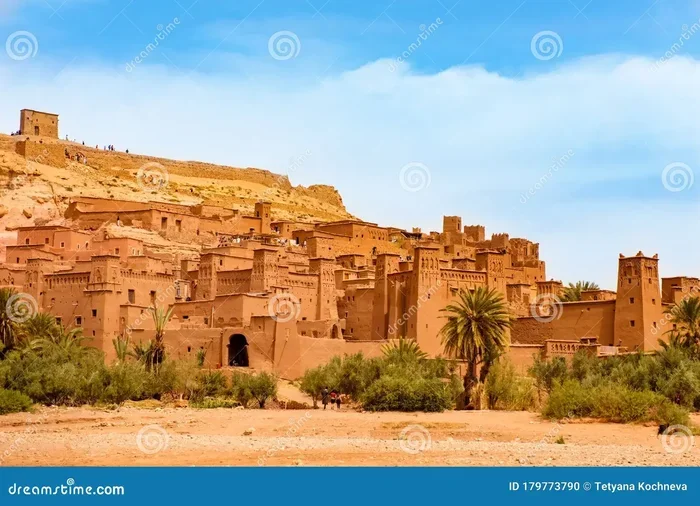
Featured image for Ait Ben Haddou kasbah Morocco
Image source: thumbs.dreamstime.com
A private 2 day tour from Marrakech to Ouarzazate is the ultimate way to experience southern Morocco in comfort and flexibility. This journey takes you across the High Atlas Mountains through the spectacular Tizi n’Tichka pass, past ancient kasbahs, and into the dramatic landscapes that have served as backdrops for Hollywood blockbusters like Gladiator and Game of Thrones. With a private driver-guide, you set your own pace, stop wherever you like, and gain insider access to UNESCO World Heritage sites, traditional Berber villages, and the film studios that put Ouarzazate on the world map.
Picture this: you wake up in a bustling riad in Marrakech, sip fresh orange juice on a quiet terrace, and by lunchtime you’re winding through snow-dusted mountain passes, camera in hand, with no one but your driver-guide and the open road ahead of you. That is the magic of a private 2 day tour from Marrakech to Ouarzazate. It is not just a transfer between two cities. It is a full immersion into the geography, history, and film lore of southern Morocco.
Most travelers arrive in Marrakech dreaming of souks, palaces, and spicy tagines. The wise ones soon realize that the real adventure begins once they leave the city. South of Marrakech lies a Morocco that feels older, quieter, and more cinematic. Think red earth, palm-lined valleys, crumbling kasbahs, and skies so wide they look painted. Ouarzazate sits at the gateway to the Sahara, and the road between these two cities is one of the most scenic drives in North Africa.
Doing this route over two days, with a private guide, changes everything. You can stop at a roadside pottery village, linger at a panoramic viewpoint, or share mint tea with a Berber family. You are not bound by bus schedules or crowded group tours. You travel at your own rhythm, and that is exactly what makes this experience unforgettable.
Key Takeaways
- Route Overview: The classic Marrakech to Ouarzazate route covers roughly 200 kilometers (125 miles) each way, crossing the High Atlas Mountains via the Tizi n’Tichka pass at 2,260 meters (7,415 feet) elevation.
- Must-See Stops: Ait Benhaddou (UNESCO site), Taourirt Kasbah, Atlas Studios, Draa Valley, and Ouarzazate city are the headline attractions.
- Best Travel Season: October through April offers the most comfortable temperatures for sightseeing and mountain driving, with daytime highs between 18°C and 25°C (64°F–77°F).
- Private vs. Group: A private tour gives you door-to-door service, flexible stops, and a dedicated driver-guide, which is ideal for photographers, families, and couples seeking privacy.
- Film History: Ouarzazate is nicknamed the “Hollywood of Africa,” with more than 100 international productions filmed here since the 1960s.
- Practical Tip: Two days is the minimum time needed to enjoy this route without rushing; one-day trips feel cramped and skip the Draa Valley.
- Budget Range: Private 2-day tours typically cost between €180 and €400 per person, depending on vehicle class and hotel standard.
📑 Table of Contents
- Why Choose a Private 2 Day Tour from Marrakech to Ouarzazate?
- The Classic Route: Who, What, Where, When, and Why
- Day-by-Day Itinerary Breakdown
- Highlights You Should Not Miss
- What to Pack and Practical Tips
- Choosing the Right Tour Operator
- Frequently Asked Questions About the Marrakech to Ouarzazate Route
- Final Thoughts: Why This Trip Belongs on Your Bucket List
Why Choose a Private 2 Day Tour from Marrakech to Ouarzazate?
If you have ever joined a large group tour, you know the drill. You wait for stragglers, follow a script, and squeeze through monuments shoulder-to-shoulder. A private tour flips that script completely. Think of it like the difference between flying economy and having your own car: both get you there, but one is far more relaxing.
The Freedom to Set Your Own Pace
With a private driver-guide, you decide when to leave, where to stop, and how long to linger. Want to photograph a herd of goats crossing the road? Take five minutes. Want to skip a museum? No problem. This kind of flexibility is priceless, especially on a route with so many photo-worthy stops.
Comfort and Personal Attention
Most private tours use air-conditioned 4×4 vehicles or modern minivans with leather seats and plenty of legroom. Your driver doubles as a guide, sharing local knowledge, pointing out hidden viewpoints, and even helping you bargain at roadside markets. According to the Moroccan Ministry of Tourism, private tours now account for nearly 40% of all desert-bound bookings, a clear sign that travelers are choosing quality over quantity.
Safety and Local Expertise
Mountain roads in Morocco can be tricky, especially in winter. Private drivers know the conditions, drive defensively, and speak English, French, or Arabic. They also handle all logistics: tolls, parking, and restaurant reservations. You simply enjoy the view.
The Classic Route: Who, What, Where, When, and Why
Let us answer the five W’s of this journey so you know exactly what to expect.
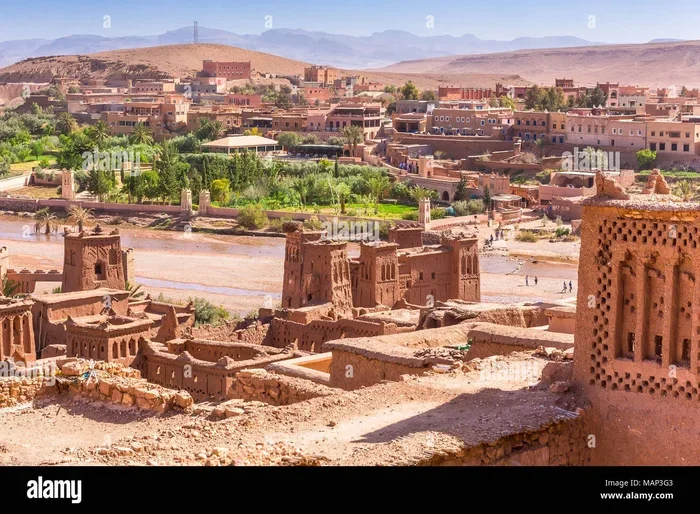
Visual guide about Ait Ben Haddou kasbah Morocco
Image source: c8.alamy.com
Who Is This Tour For?
This tour suits almost every type of traveler: couples seeking a romantic escape, families with kids who need flexible nap times, photographers chasing golden-hour light, history lovers tracing ancient caravan routes, and film buffs hunting for Game of Thrones filming locations. If you love landscapes more than cities, this trip is for you.
What Will You See?
The route is a highlight reel of southern Morocco. Expect snow-capped peaks in winter, terraced valleys in spring, ochre desert plateaus year-round, and palm oases that look like they belong in a painting. Key attractions include Ait Benhaddou, Taourirt Kasbah, Atlas Film Studios, the Draa Valley, and the city of Ouarzazate itself.
Where Does the Route Go?
The journey starts in Marrakech (400 meters elevation) and crosses the High Atlas Mountains via the Tizi n’Tichka pass, one of the highest paved roads in North Africa. From there, the road descends into the desert hinterland, passing through Telouet and the Ounila Valley before reaching Ouarzazate (1,160 meters elevation). On day two, the route extends toward the Draa Valley, often reaching Agdz or Zagora, before returning.
When Is the Best Time to Travel?
The ideal window is October through April. Summer temperatures in Ouarzazate regularly climb above 40°C (104°F), which can make sightseeing exhausting. Spring (March–May) is especially beautiful because the almond trees bloom and the valleys turn green. Winter brings snow to the High Atlas, creating dramatic contrasts against the red desert below.
Did You Know? The Tizi n’Tichka pass is higher than many Alpine ski resorts. At 2,260 meters, it is roughly the same elevation as the top of Mount Snowdon in Wales.
Why Take Two Days Instead of One?
One-day tours exist, but they are rushed. You typically get about 45 minutes at Ait Benhaddou and skip the Draa Valley entirely. Two days let you breathe, add a sunrise photo session, and include a quieter overnight stay in Ouarzazate. It is the difference between a photo and a memory.
Day-by-Day Itinerary Breakdown
Here is what a well-designed private 2 day tour from Marrakech to Ouarzazate usually looks like. Of course, your guide will tailor it to your interests.
Day 1: Marrakech to Ouarzazate via the Atlas Mountains
Morning: Your driver picks you up at 7:30 or 8:00 AM from your riad or hotel. The early start beats the Marrakech traffic and the mountain tour buses. Within an hour, the city gives way to olive groves and red-soil plains.
Mid-morning: You climb steadily toward the Tizi n’Tichka pass. Along the way, your guide will point out traditional Berber villages, terraced fields, and possibly wild Barbary macaques near the summit. A quick stop at the pass offers sweeping views in every direction.
Lunch: Most tours stop in the small town of Ait Benhaddou or Ouarzazate. A typical three-course Berber lunch costs around 80–120 MAD (€7–10) and includes tagine, couscous, or harira soup.
Afternoon: Visit Ait Benhaddou, the iconic mud-brick kasbah that has starred in Gladiator, Lawrence of Arabia, and Game of Thrones. UNESCO listed it in 1987. Allow at least 90 minutes to walk across the river and climb to the top of the village for the classic panoramic shot.
Late Afternoon: Drive the short distance to Ouarzazate and check into your hotel or riad. If energy remains, visit Taourirt Kasbah, a 19th-century palace with over 300 rooms, located right in town.
Evening: Dinner is usually at your accommodation or a nearby restaurant. Try medfouna, a stuffed Berber flatbread that is local to Ouarzazate.
Day 2: Ouarzazate to the Draa Valley and Return
Morning: After breakfast, you have two main options: visit Atlas Film Studios (a real working studio with original sets from Gladiator and Kingdom of Heaven) or skip ahead to the Draa Valley. Film fans should budget at least two hours for the studio.
Midday: Drive south toward Agdz, following the lush Draa Valley, Morocco’s longest river at roughly 1,100 kilometers (though much of it is dry). The valley is lined with date palms, old kasbahs, and small villages. Stop at Tamnougalt, one of the oldest kasbahs in the region.
Lunch: Many tours include lunch in Agdz or Zagora. A simple tajine lunch here feels more authentic than the city restaurants in Marrakech.
Afternoon: Begin the drive back to Marrakech, but with a different twist. Some tours loop via the scenic Ounila Valley and the village of Telouet, where the ruined Kasbah of the Glaoui once ruled. This adds variety and avoids backtracking.
Evening: You typically arrive back in Marrakech between 6:00 and 8:00 PM, depending on stops. Your driver drops you at your riad, ending the journey.
Highlights You Should Not Miss
While every traveler has different interests, a few stops are non-negotiable on any private 2 day tour from Marrakech to Ouarzazate.
Ait Benhaddou: The Star of the Show
This fortified village (ksar) sits along the former caravan route between the Sahara and Marrakech. It is made entirely of rammed earth, wood, and straw, yet has survived for centuries. Today, fewer than a dozen families still live inside the walls, while most residents have moved to the modern village across the river.
Walking through Ait Benhaddou feels like stepping onto a film set, because it often is one. The village has appeared in over 20 major productions. The most photographed angle is from the riverbed looking up at the main towers. Visit early morning or late afternoon to avoid tour buses and harsh light.
Taourirt Kasbah: The Hidden Palace
Right in the heart of Ouarzazate, Taourirt Kasbah was once the residence of the Glaoui family, the most powerful Berber lords of the early 20th century. The Glaoui effectively controlled southern Morocco until Moroccan independence in 1956. The kasbah has beautifully painted ceilings, narrow staircases, and quiet inner courtyards. It is much less crowded than Ait Benhaddou and offers a more intimate look at Moroccan craftsmanship.
Atlas Film Studios: Hollywood in the Desert
If you love movies, this stop is pure joy. Founded in 1983, Atlas Studios is the largest film studio in Africa and one of the largest in the world by land area. Productions filmed here include Gladiator (2000), Kingdom of Heaven (2005), Babel (2006), and parts of Game of Thrones.
Tours last about 90 minutes and walk you through Egyptian temple sets, Roman arenas, and Tibetan monasteries. Guides share funny behind-the-scenes stories, like how the crew built and dismantled an entire replica of Jerusalem for Kingdom of Heaven.
The Draa Valley: Morocco’s Green Ribbon
South of Ouarzazate, the landscape shifts again. The Draa Valley is a long, narrow strip of greenery that snakes through the desert. It is lined with over 2 million date palms and dotted with crumbling kasbahs. Villages like Tamnougalt and Tinfou feel frozen in time.
This valley is the gateway to the Sahara. From Agdz, the road continues to Zagora and eventually the dunes of Erg Chegaga. Most 2-day tours stop at Agdz and turn back, but some extend to Zagora if you have extra time or energy.
Tizi n’Tichka Pass: The Mountain Crown
The drive across this pass is, for many travelers, the most memorable part of the journey. On a clear day, you can see for 50 kilometers or more. In winter, snow often closes sections of the road, but that also makes for magical scenery. Your driver will know exactly where to stop for the best views.
Did You Know? The High Atlas Mountains are home to the Barbary macaque, Africa’s only wild monkey population north of the Sahara. Spotting them near the Tizi n’Tichka pass is a real treat.
What to Pack and Practical Tips
You do not need a lot of gear, but a few essentials make a big difference.
Clothing and Gear
- Layers: Mornings in the mountains can be cold (5°C / 41°F) even when Marrakech is warm.
- Comfortable shoes: Ait Benhaddou and the kasbahs have uneven steps and dusty paths.
- Sunglasses and sunscreen: The sun is strong, especially at altitude.
- Camera with extra battery: Cold weather and long drives drain batteries quickly.
- Cash in small notes: Many rural stops do not accept cards.
Health and Safety
Mountain roads are well-maintained but winding. If you suffer from motion sickness, bring medication. Tap water is not safe to drink; stick to bottled water, which your driver will provide. Morocco’s emergency number is 15 (ambulance) or 19 (police), and most guides carry a first-aid kit.
Money and Etiquette
The Moroccan dirham (MAD) is a closed currency, so you cannot easily buy it outside Morocco. Withdraw from ATMs in Marrakech before leaving. Tipping is customary: budget around 100–150 MAD per day for your driver, more if he went above and beyond. Always ask before photographing people, especially in Berber villages.
Booking Tips
- Book at least 2–3 weeks in advance during spring and autumn.
- Read recent reviews on independent platforms like TripAdvisor or Google.
- Confirm whether meals, entrance fees, and accommodation are included in the quote.
- Choose a licensed agency registered with the Moroccan Ministry of Tourism.
- Specify your hotel standard: budget riads cost around €40–60 per night, mid-range hotels €80–120, and luxury desert camps or kasbah hotels can exceed €200.
Choosing the Right Tour Operator
Not all private tours are created equal. Here is how to separate the great from the merely good.
What to Look For
A reputable operator will offer a clear written itinerary, transparent pricing, and a vehicle that matches your group size. They will also confirm the driver’s language skills and let you customize the route. Be wary of operators who quote suspiciously low prices or pressure you to pay the full amount upfront.
Vehicle Options
For couples or solo travelers, a comfortable 4×4 is ideal. Families of three or four might prefer a minivan with more luggage space. Larger groups can request minibuses. Air conditioning is essential, especially in summer. Heated seats and Wi-Fi are bonuses but not deal-breakers.
Hidden Gems and Local Knowledge
The best guides know the secret spots: a quiet viewpoint at Ait Benhaddou, a family-run pottery workshop, a hidden Berber lunch. Ask the operator if your guide is local. A driver from Ouarzazate or the surrounding villages knows the area deeply and often has family connections to the kasbahs you visit.
Insurance and Licensing
Confirm that the company carries passenger insurance and that the driver is licensed by the Moroccan government. Licensed drivers wear ID badges and drive registered vehicles. This protects you in case of an accident and ensures a baseline of professionalism.
Did You Know? Morocco welcomed 17.4 million tourists in 2024, a record high. Ouarzazate province saw a 15% increase in visitors, driven largely by film tourism and the growing popularity of desert routes.
Frequently Asked Questions About the Marrakech to Ouarzazate Route
Is the road from Marrakech to Ouarzazate safe?
Yes, the road is well-maintained and safe for tourists year-round. It is a modern two-lane highway with regular guardrails. Your private driver will also know the safest sections, especially in winter when snow or ice can occur near the Tizi n’Tichka pass.
How long does the drive take?
The driving time is roughly 4 hours one way without stops. With photo breaks, lunch, and sightseeing, plan for a full 7 to 8 hours each day. A two-day tour is ideal because it avoids the exhaustion of a marathon one-day trip.
What is the best hotel in Ouarzazate?
Ouarzazate has a range of options. Budget travelers like the Riad Bouchedor or Hotel Zaghro. Mid-range favorites include Riad Ouarzazate and Dar Chams. For a splurge, the Berber Palace Hotel and the recently restored Dar Ahlam offer kasbah-style luxury and gardens.
Can I extend the tour to the Sahara?
Absolutely. Many operators offer a 3-day or 4-day version that continues to Merzouga or Erg Chegaga. If you have the time, adding one more night to sleep under the stars in a desert camp is an unforgettable experience. The extra day lets you ride a camel, watch a Saharan sunset, and enjoy Berber drumming.
Do I need a visa for Morocco?
Most Western travelers (US, EU, UK, Canada, Australia) do not need a visa for stays under 90 days. You only need a valid passport with at least six months’ validity. Some nationalities should check the latest rules with their local Moroccan embassy.
What language do guides speak?
Most private guides speak English, French, and Arabic. Some also speak Spanish or German. If you need a specific language, request it when booking. Knowing a few words of Arabic, like “salam alaikum” (peace be upon you) or “shukran” (thank you), is always appreciated.
Final Thoughts: Why This Trip Belongs on Your Bucket List
A private 2 day tour from Marrakech to Ouarzazate is more than a sightseeing trip. It is a journey through layers of Moroccan history, geography, and culture. You cross one of the most spectacular mountain passes in Africa, walk through a UNESCO World Heritage kasbah that has stood for centuries, explore film sets used by Hollywood legends, and follow a green ribbon of palm oases into the edge of the Sahara. All in the comfort of a private vehicle, with a guide who treats you like a guest, not a number.
Two days is the sweet spot. Long enough to savor the journey, short enough to fit into a Morocco itinerary without disrupting other plans. You can combine it with a few days in Marrakech, add a desert extension, or pair it with a coastal escape to Essaouira. The flexibility is yours.
So if you are planning a trip to Morocco and wondering whether this route is worth the time, the answer is a clear yes. Book it, pack your camera, and prepare for some of the most breathtaking scenery you will ever see. The road from Marrakech to Ouarzazate is calling, and it is best answered slowly, with a private guide and a flexible schedule.