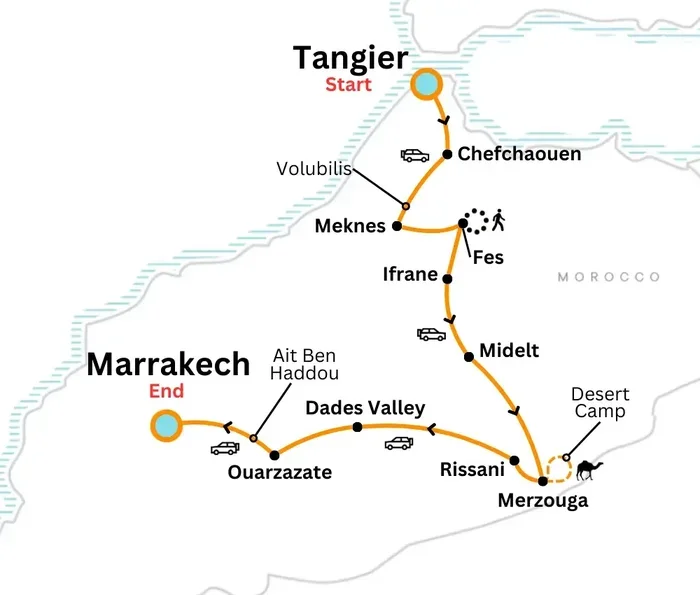
Featured image for Tangier Marrakech desert tour
Image source: moroccolinetours.com
A 9 days tour from Tangier to Marrakech is the perfect way to experience Morocco’s most iconic destinations in one unforgettable journey. This comprehensive itinerary takes you through four imperial cities, the stunning Sahara Desert, the Atlas Mountains, and charming coastal towns. Designed for travelers who want depth, not just snapshots, this tour combines cultural immersion with breathtaking scenery and includes camel trekking, guided medina walks, and authentic riad stays.
Picture this: you’re standing at the edge of the Sahara Desert as the sun sets, painting the golden dunes in shades of orange and crimson. Behind you, camels rest in the warm sand. In front of you, a journey that started on the windswept shores of the Mediterranean is reaching its magical climax. This is what a 9 days tour from Tangier to Marrakech promises—and it delivers far beyond expectations.
Morocco is a country that feels like stepping into another world, yet it remains just a short flight from Europe. It’s a place where ancient medinas buzz with life, where snow-capped mountains meet endless desert, and where every corner reveals a new color, scent, or sound. But with so much to see, planning the perfect Moroccan adventure can feel overwhelming. That’s where a well-designed 9-day itinerary becomes your best friend.
This guide will walk you through everything you need to know about this iconic route. We’ll cover the destinations, the experiences, the practical tips, and the insider secrets that turn a good trip into an unforgettable one. Whether you’re a first-time visitor or a seasoned traveler, this comprehensive breakdown will help you understand why this particular journey is considered the gold standard of Moroccan tourism.
Key Takeaways
- Complete North-to-South Coverage: The 9 days tour from Tangier to Marrakech spans over 1,200 kilometers, covering Morocco’s most diverse landscapes from Mediterranean coast to Saharan dunes.
- Four Imperial Cities: You’ll visit Fes, Meknes, Rabat, and Marrakech—each UNESCO-listed treasures showcasing centuries of Moroccan heritage and architecture.
- Sahara Desert Experience: A camel trek into the Erg Chebbi dunes and an overnight stay in a Berber desert camp is the highlight of this journey.
- Atlas Mountains Crossing: The route winds through the Middle and High Atlas ranges, with stops at Berber villages and stunning valleys like the Dades and Todra Gorges.
- Optimal Travel Duration: Nine days provides the ideal balance—enough time to explore without rushing, yet compact enough for most vacation schedules.
- Year-Round Accessibility: This tour operates in all seasons, though spring (March-May) and autumn (September-November) offer the most comfortable temperatures.
- Cultural Immersion: Beyond sightseeing, the tour includes cooking classes, traditional music performances, and authentic local cuisine experiences.
📑 Table of Contents
- What Is a 9 Days Tour from Tangier to Marrakech?
- Who Should Take This Tour and Why?
- Where Does the Tour Go? Key Destinations Explained
- When Is the Best Time to Take This Tour?
- How to Plan and Book Your 9 Days Tour from Tangier to Marrakech
- Why This Route Is Considered the Best of Morocco
- Final Tips for an Unforgettable Experience
What Is a 9 Days Tour from Tangier to Marrakech?
A 9 days tour from Tangier to Marrakech is a guided or self-guided journey that traverses Morocco from its northernmost tip to one of its most famous southern cities. Think of it as a carefully crafted storybook, where each chapter introduces a new setting, a new character, and a new adventure. The tour typically follows a loop or linear route, hitting all the major highlights along the way.
Imagine Morocco as a layered cake. Each city and region is a different layer—some sweet, some savory, some spicy. The Tangier-to-Marrakech route lets you taste every layer in a logical sequence, starting with the Mediterranean-influenced north and gradually moving south toward the Saharan flavors of the desert and the bustling markets of Marrakech.
The Classic Route Explained
The standard 9-day itinerary generally follows this path:
- Day 1: Arrival in Tangier, exploration of the coastal city
- Day 2: Travel to Chefchaouen (the famous blue city)
- Day 3: Drive to Fes via Volubilis and Meknes
- Day 4: Full day exploring Fes
- Day 5: Journey to the Sahara Desert via the Middle Atlas
- Day 6: Sahara Desert experience and camel trek
- Day 7: Travel through the Todra and Dades Gorges
- Day 8: Cross the High Atlas Mountains to Marrakech
- Day 9: Explore Marrakech and departure
Some variations exist. Some tours start in Marrakech and end in Tangier. Others include additional stops like Essaouira or Ouarzazate. But the core experience remains the same: a comprehensive sweep of Morocco’s most iconic destinations.
Who Should Take This Tour and Why?
Who exactly is this journey designed for? The short answer: almost everyone. But let’s get specific.
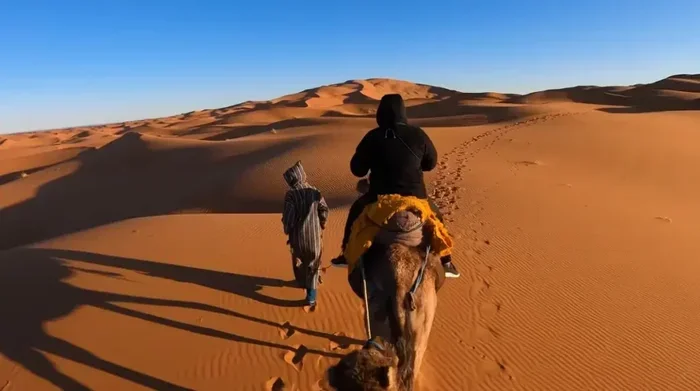
Visual guide about Tangier Marrakech desert tour
Image source: safariestours.com
Perfect for First-Time Visitors
If you’ve never been to Morocco, this tour is essentially a complete introduction. Morocco received a record 14.5 million tourists in 2023, according to the Ministry of Tourism, and many of them followed similar paths. First-timers benefit from a structured itinerary that removes the stress of planning while ensuring they don’t miss the essentials.
Think of it like a greatest hits album. You get all the famous tracks in one package, curated by experts who know which songs flow best together.
Ideal for Culture Enthusiasts
History buffs, architecture lovers, and culture vultures will find endless material here. Morocco has nine UNESCO World Heritage Sites, and this tour touches on at least four of them, including the medinas of Fes and Marrakech, the archaeological site of Volubilis, and the Portuguese City of Mazagan in El Jadida (sometimes included as an optional stop).
Great for Adventure Seekers
Camel trekking, hiking through gorges, navigating winding mountain roads—this tour isn’t just about sightseeing. It’s about doing. The Sahara camel ride alone, usually lasting 1-2 hours into the dunes, is an experience that stays with travelers for decades.
Suitable for Various Budgets
Whether you’re looking for a luxury experience with 5-star riads and private guides, or a budget-friendly adventure with shared transportation and authentic local stays, this tour adapts. Prices typically range from $800 to $3,500 per person depending on the level of comfort and exclusivity.
Where Does the Tour Go? Key Destinations Explained
Let’s break down each major stop, because knowing what awaits you makes the journey even more exciting.
Tangier: The Gateway to Africa
Tangier sits at the crossroads of Europe and Africa, literally. The city is located just 14 kilometers across the Strait of Gibraltar from Spain. For centuries, it has been a meeting point of cultures—Phoenician, Roman, Portuguese, British, French, and Moroccan influences blend in its architecture, cuisine, and language.
Did You Know? Tangier was an international zone administered by eight countries from 1923 to 1956. The American Legation building, established in 1821, is the only U.S. National Historic Landmark on foreign soil.
Key attractions in Tangier include the Kasbah, the Medina, the Caves of Hercules, and Cap Spartel, where the Atlantic Ocean meets the Mediterranean Sea.
Chefchaouen: The Blue Pearl
Nestled in the Rif Mountains, Chefchaouen is famous for its blue-washed buildings. But why blue? There are several theories: some say it was introduced by Jewish refugees in the 1930s as a symbol of the sky and heaven; others claim it helps repel mosquitoes. The truth is, it creates one of the most photogenic towns in the world.
Spend a day wandering the narrow streets, shopping for local handicrafts, and enjoying the laid-back mountain atmosphere. Chefchaouen is also a great place to experience traditional Moroccan weaving.
Volubilis and Meknes: Roman Ruins and Imperial Grandeur
Volubilis is the best-preserved Roman ruins in Morocco and a UNESCO World Heritage Site. Founded in the 3rd century BCE, it features stunning mosaics, triumphal arches, and crumbling columns that tell stories of a Roman province at the edge of the empire.
Meknes, one of Morocco’s four imperial cities, served as the capital under Sultan Moulay Ismail in the 17th century. Its massive gates, like Bab Mansour, are among the most impressive in Morocco.
Fes: The Spiritual and Cultural Heart
If Morocco has a soul, it’s in Fes. Founded in the 9th century, Fes is home to the world’s oldest continuously operating university, the University of al-Qarawiyyin, established in 859 CE. The Fes el-Bali medina is a labyrinth of over 9,000 alleys, home to tanneries, mosques, madrasas, and souks.
Did You Know? The famous Chouara Tannery in Fes has been operating since the 11th century using techniques virtually unchanged for a thousand years.
A full day here includes guided medina walks, visits to the Bou Inania Madrasa, the Al-Attarine Madrasa, and the Nejjarine Museum of Wooden Arts and Crafts.
Merzouga and the Sahara Desert
The journey from Fes to the Sahara takes you through the Middle Atlas Mountains, passing through the cedar forests of Ifrane (often called “Little Switzerland of Morocco”) and the stunning Ziz Valley.
Merzouga is the gateway to Erg Chebbi, where sand dunes can reach heights of 150 meters. The camel trek at sunset is iconic, but equally impressive is the sunrise. Sleeping in a Berber desert camp, complete with traditional music around a campfire, is a bucket-list experience.
Todra and Dades Gorges
After the desert, the route winds through dramatic landscapes. The Todra Gorge features towering limestone walls reaching 400 meters high, popular with rock climbers. The Dades Valley, often called the “Valley of a Thousand Kasbahs,” winds through surreal rock formations called “monkey fingers.”
Marrakech: The Red City Finale
Marrakech is your final destination, and it’s a fitting climax. Known as the “Red City” because of its distinctive red sandstone buildings, Marrakech has been a major trading hub for nearly a thousand years.
Must-see attractions include:
- Jemaa el-Fnaa: The famous square that comes alive at night with food stalls, musicians, and storytellers
- Bahia Palace: A stunning example of Moroccan-Islamic architecture
- Saadian Tombs: Hidden royal tombs dating to the 16th century
- Majorelle Garden: A botanical garden once owned by Yves Saint Laurent
- Koutoubia Mosque: Marrakech’s iconic 12th-century landmark
When Is the Best Time to Take This Tour?
Timing matters. Morocco’s climate varies dramatically by region, and the same season can bring different conditions to the coast, mountains, and desert.
Spring (March to May)
This is widely considered the best time to visit. Temperatures are mild across the country—around 20-25°C (68-77°F) in most areas. The desert is comfortable, the mountains are accessible, and the landscapes are green after winter rains. It’s like the Goldilocks zone—not too hot, not too cold.
Autumn (September to November)
Autumn offers similar advantages to spring, with the bonus of harvest season in many regions. October in particular sees comfortable temperatures and clear skies.
Summer (June to August)
Summer can be challenging. Temperatures in the Sahara often exceed 45°C (113°F), making desert activities uncomfortable during midday. However, coastal areas and mountain regions remain pleasant. If you must travel in summer, plan early morning activities in the desert.
Winter (December to February)
Winter brings cooler temperatures and occasional snow to the Atlas Mountains. The desert can be surprisingly cold at night, dropping to near freezing. However, this season offers fewer tourists and lower prices. The crossing of the Atlas Mountains in winter can sometimes be affected by snow, so check conditions.
How to Plan and Book Your 9 Days Tour from Tangier to Marrakech
Now that you know what to expect, let’s talk about logistics.
Choosing Between Guided and Self-Guided
Guided tours offer convenience, local expertise, and the security of having arrangements handled. Drivers often double as informal guides, sharing knowledge about culture, history, and local customs. This option is ideal for those who want to relax and absorb the experience.
Self-guided tours give you flexibility. You can linger longer in places you love, skip what doesn’t interest you, and travel at your own pace. However, they require more planning, especially for desert camping, which often needs advance booking.
What to Pack
Smart packing makes a huge difference. Here’s a practical list:
- Comfortable walking shoes (the medinas have uneven surfaces)
- Layers for varying temperatures (desert nights can be cold)
- Sun protection (hat, sunglasses, sunscreen)
- Modest clothing for visiting religious sites
- Power adapter (Morocco uses Type C and E plugs)
- Camera with extra batteries
- Small daypack for excursions
- Reusable water bottle
Budget Considerations
Here’s a rough breakdown of typical costs for a mid-range 9-day tour:
- Transportation: Private vehicle with driver: $100-150 per day
- Accommodation: Mid-range riads: $50-120 per night
- Meals: $15-30 per day (excluding drinks)
- Entrance fees: $5-10 per major site
- Camel trek and desert camp: $50-100 per person
- Guide fees: $25-50 per day in major cities
Total mid-range budget: approximately $1,500-2,500 per person. Luxury tours can exceed $4,000, while budget options can be done for $800-1,200 if you use shared transportation and simpler accommodations.
Health and Safety
Morocco is generally safe for tourists. The U.S. State Department rates most tourist regions as Level 2 (exercise increased caution), with specific areas near the Algerian border and certain rural zones having higher advisories.
Recommended health precautions include:
- Drinking bottled water only
- Eating at reputable restaurants
- Carrying basic medications
- Having travel insurance that covers medical evacuation
- Getting vaccinated for Hepatitis A and Typhoid (recommended by most travel clinics)
Visa and Entry Requirements
Morocco is visa-free for citizens of most Western countries for stays up to 90 days. Your passport should be valid for at least six months beyond your entry date. Always check the latest requirements with your nearest Moroccan consulate or embassy.
Why This Route Is Considered the Best of Morocco
After exploring all the details, let’s step back and consider the bigger picture.
The Logical Flow Argument
The Tangier-to-Marrakech route follows a natural geographic flow—north to south. You start in the Mediterranean climate zone and gradually move into continental, then desert, then mountain climates. This progression builds anticipation and variety. Each day feels distinctly different from the last.
The Cultural Depth Argument
Morocco’s four imperial cities—Fes, Meknes, Rabat, and Marrakech—each served as capitals during different dynasties. Visiting them in sequence tells the story of Moroccan history, from the Idrisid dynasty through the Almoravids, Almohads, Marinids, Saadians, and Alaouites. It’s like reading chapters of a rich historical novel.
The Sensory Diversity Argument
Few countries pack so much sensory variety into such a compact area. In nine days, you’ll smell Atlantic sea air, mountain pine forests, desert sand, and spice-scented medinas. You’ll taste tagine, couscous, fresh seafood, and mint tea. You’ll hear Berber music, call to prayer, souk haggling, and camel bells.
The Practicality Argument
Nine days is long enough to see Morocco properly but short enough to fit within a typical vacation allowance. It’s the sweet spot between rushing through and overcommitting.
Final Tips for an Unforgettable Experience
Before you pack your bags, keep these final pieces of advice in mind.
Embrace the Unexpected
The best travel memories often come from unplanned moments. Maybe it’s a spontaneous invitation to tea with a Berber family, a wrong turn that leads to a hidden viewpoint, or a sunset that takes your breath away. Stay flexible and open.
Learn a Few Arabic Phrases
Even basic greetings like “As-salaam alaikum” (peace be upon you) and “Shukran” (thank you) go a long way. Moroccans appreciate the effort, and it often leads to warmer interactions.
Bargain Respectfully in the Souks
Haggling is expected in Moroccan markets, but do it with a smile. Start at about 50% of the asking price and meet somewhere in the middle. It’s a cultural exchange, not a confrontation.
Respect Local Customs
Morocco is a Muslim country with conservative values in many areas. Dress modestly, especially when visiting religious sites or rural communities. Ask permission before photographing people.
Stay Connected
Consider getting a local SIM card for the duration of your trip. Moroccan networks like Maroc Telecom and Orange offer affordable tourist packages with data. This helps with navigation, translation, and staying in touch.
A 9 days tour from Tangier to Marrakech isn’t just a vacation—it’s a transformation. You’ll arrive home with stories to tell, photos to share, and a deeper understanding of a culture that has fascinated travelers for centuries. The Sahara’s silence, the medinas’ chaos, the mountains’ majesty—they all combine into an experience that stays with you long after you’ve unpacked your bags.
Morocco has been called “the country that wears its history on its sleeve,” and a well-planned 9-day tour lets you roll up your own sleeves and dive into that history. Whether you come for adventure, culture, cuisine, or simply the joy of discovery, this journey delivers on every promise.
Start planning today, and prepare yourself for the trip of a lifetime.
Frequently Asked Questions
What is included in a typical 9 days tour from Tangier to Marrakech?
A standard 9 days tour from Tangier to Marrakech usually includes accommodation in riads and hotels, transportation in a private vehicle with driver, a camel trek in the Sahara, a night in a desert camp, guided tours in Fes and Marrakech, and breakfast daily. Some packages also include dinners and entrance fees to major attractions.
Is 9 days enough to see Morocco from Tangier to Marrakech?
Yes, 9 days is considered the ideal duration for this route. It allows enough time to visit all four imperial cities, experience the Sahara Desert, cross the Atlas Mountains, and explore without feeling rushed. Most travelers find this timeframe provides the perfect balance of depth and pace.
What is the best season for a 9 days tour from Tangier to Marrakech?
Spring (March-May) and autumn (September-November) are the best seasons for this tour. Temperatures are mild across all regions, the desert is comfortable for camel trekking, and the Atlas Mountain passes are generally clear. Summer can be extremely hot in the desert, while winter brings cold nights and occasional snow in the mountains.
How much does a 9 days tour from Tangier to Marrakech cost?
Costs vary widely based on accommodation level and inclusions. Budget tours start around $800 per person, mid-range tours typically cost $1,500-2,500, and luxury experiences can exceed $4,000. Most tours offer private options for couples or small groups at slightly higher rates.
Do I need a visa for Morocco for this 9-day tour?
Most Western passport holders, including citizens of the US, UK, Canada, EU countries, and Australia, do not need a visa for stays under 90 days. Your passport should be valid for at least six months beyond your travel dates. Always verify current requirements with your local Moroccan embassy.
Is Morocco safe for tourists on this 9-day itinerary?
Yes, Morocco is generally considered safe for tourists. The major tourist routes, including the Tangier to Marrakech path, have well-developed infrastructure and security. Standard precautions apply, such as guarding valuables in crowded souks and following local customs. Travel insurance is highly recommended for peace of mind.