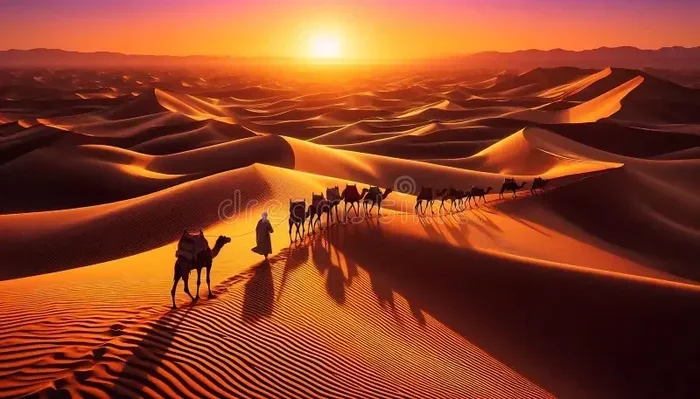
Featured image for Sahara desert camel caravan
Image source: thumbs.dreamstime.com
A 6 days tour from Tangier to Sahara Desert is the ultimate Moroccan adventure, covering over 1,200 kilometers through the country’s most iconic landscapes. From the blue streets of Chefchaouen to the towering dunes of Erg Chebbi in Merzouga, this journey blends imperial cities, mountain valleys, and Saharan magic. Perfect for first-time visitors, this route maximizes sightseeing while minimizing backtracking, offering camel rides, traditional Berber dinners, and unforgettable starry nights in the desert.
Imagine standing at the edge of a vast ocean of golden sand, watching the sun melt into the horizon while your camel rests beside you. This isn’t a dream reserved for the pages of National Geographic—it’s the reality awaiting anyone who books a 6 days tour from Tangier to Sahara Desert.
Morocco sits just 14 kilometers (8.7 miles) from Spain across the Strait of Gibraltar, yet feels like a different world entirely. Each year, over 13 million tourists visit this North African gem, and a significant portion of them follow the classic Tangier-to-Sahara route. Why? Because it works. It’s the most efficient way to see Morocco’s highlights without wasting precious vacation days on long, repetitive bus rides.
Think of this tour as a greatest hits album of Morocco. You get the blue pearl of Chefchaouen, the imperial grandeur of Fes, the cinematic dunes of Merzouga, and the buzzing souks of Marrakech—all wrapped into six perfectly paced days. Whether you’re a solo backpacker, a couple on a romantic getaway, or a family seeking adventure, this itinerary delivers memories that last a lifetime.
Key Takeaways
- Comprehensive Route: The 6 days tour from Tangier to Sahara Desert covers Tangier, Chefchaouen, Fes, Merzouga, and Marrakech in one efficient loop.
- Erg Chebbi Dunes: Merzouga’s Erg Chebbi features dunes reaching 150 meters (492 feet), among the tallest in Morocco.
- UNESCO Heritage Sites: The tour includes visits to at least 4 UNESCO World Heritage Sites, including the Fes Medina and Volubilis ruins.
- Cultural Immersion: Travelers experience Berber culture through music, mint tea ceremonies, and traditional tagine cooking classes.
- Adventure Activities: Camel treks, sandboarding, 4×4 desert excursions, and optional quad biking are included or available.
- Best Travel Seasons: Spring (March-May) and autumn (September-November) offer the most comfortable temperatures for desert travel.
- Group vs Private: Both options exist, with private tours offering flexibility and small groups (8-15 people) providing affordability.
📑 Table of Contents
- What Is a 6 Days Tour from Tangier to Sahara Desert?
- Detailed Day-by-Day Itinerary Breakdown
- What to Expect: Accommodation, Food, and Desert Camps
- How Much Does a 6 Days Tour from Tangier to Sahara Desert Cost?
- Choosing the Right Tour Operator
- Essential Packing List for Your Sahara Adventure
- Safety, Health, and Cultural Etiquette Tips
- Conclusion: Is the 6 Days Tour from Tangier to Sahara Desert Worth It?
What Is a 6 Days Tour from Tangier to Sahara Desert?
A 6 days tour from Tangier to Sahara Desert is a guided or self-guided journey that begins in the northern coastal city of Tangier and ends in Marrakech (or returns to Tangier), passing through some of Morocco’s most spectacular scenery along the way. The “6 days” refers to five nights of accommodation with six full days of travel and exploration.
Who Is This Tour Designed For?
This itinerary is built for travelers who want depth without burnout. Unlike rushed 3-day versions that spend more time in vehicles than at attractions, the 6-day version allows proper exploration of each destination. It’s ideal for:
- First-time Morocco visitors who want a comprehensive overview
- Photography enthusiasts seeking diverse landscapes
- Cultural travelers interested in Berber, Arab, and Andalusian heritage
- Adventure seekers wanting camel treks and desert camping
- Couples and families looking for a balanced mix of activities and relaxation
Where Does the Tour Go?
The standard route follows a counter-clockwise loop:
- Tangier (starting point)
- Chefchaouen (the blue city)
- Fes (cultural capital)
- Merzouga (Sahara Desert gateway)
- Marrakech (ending point)
Some operators offer variations that include Volubilis, Ifrane, the Todra Gorge, Ouarzazate, or Ait Benhaddou. The flexibility is part of the appeal.
When Is the Best Time to Travel?
The ideal windows are spring (March to May) and autumn (September to November). During these months, desert temperatures hover between 25-30°C (77-86°F) during the day and drop to a comfortable 15-18°C (59-64°F) at night. Summer temperatures in Merzouga can exceed 45°C (113°F), making midday exploration dangerous, while winter nights can dip below freezing in the desert camps.
Why Choose This Tour Over Independent Travel?
While independent travel offers freedom, it comes with logistical headaches. Morocco’s transport infrastructure outside major cities can be tricky. Trains connect Tangier, Fes, and Marrakech, but getting from Fes to Merzouga requires either expensive private transfers or multiple bus changes. A guided tour solves this by bundling transport, accommodation, meals, and activities into one price. Think of it as an all-inclusive vacation versus cooking every meal yourself—sometimes convenience is worth the cost.
Detailed Day-by-Day Itinerary Breakdown
Understanding what each day brings helps you prepare mentally and physically. Here’s what a typical 6 days tour from Tangier to Sahara Desert looks like.
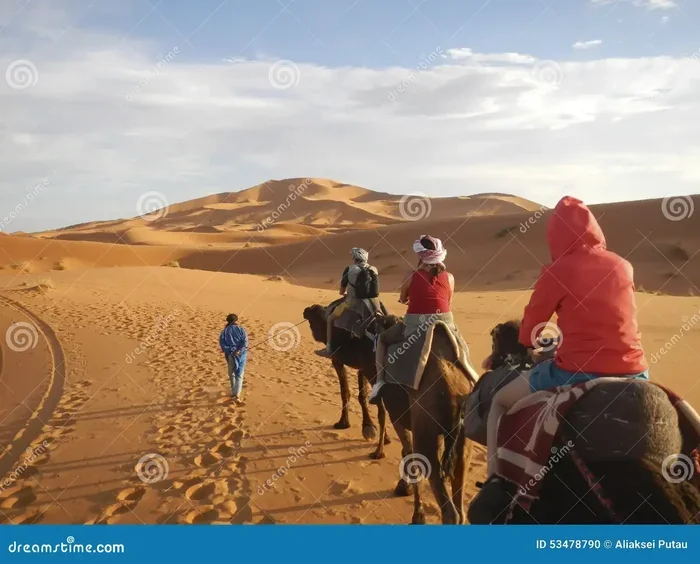
Visual guide about Sahara desert camel caravan
Image source: thumbs.dreamstime.com
Day 1: Tangier to Chefchaouen via the Rif Mountains
Your adventure begins with a morning pickup from your Tangier hotel, the port, or the airport. The drive to Chefchaouen takes roughly 3.5 hours, winding through the dramatic Rif Mountains. Along the way, you’ll stop at panoramic viewpoints where the Mediterranean Sea glitters in the distance.
Once you arrive in Chefchaouen, the afternoon is yours to explore. The medina’s blue-washed walls were reportedly painted by Jewish refugees in the 1930s, though the tradition has evolved into a defining cultural statement. Get lost in the narrow alleys, photograph the iconic Plaza Uta el-Hammam, and visit the kasbah museum.
Did You Know? Chefchaouen receives roughly 300,000 tourists annually, and its Instagram hashtag has over 1.8 million posts—making it one of the most photographed small towns in Africa.
Day 2: Chefchaouen to Fes via Volubilis and Meknes
Day two combines Roman ruins, imperial grandeur, and cultural immersion. After breakfast, you travel south to the archaeological site of Volubilis, a UNESCO World Heritage Site featuring remarkably preserved mosaics from the 3rd century AD. Picture walking through a Roman villa with original tile floors still intact after 1,700 years.
Next, you’ll visit Meknes, one of Morocco’s four imperial cities. Highlights include the stunning Bab Mansour gate, the Sahrij Souani granaries, and the Mausoleum of Moulay Ismail. Then it’s a short drive to Fes, where you’ll check into your riad (traditional Moroccan house converted to a hotel) in the medina.
Day 3: Exploring Fes – The Cultural Heart of Morocco
Day three is dedicated entirely to Fes, founded in 789 AD and home to the world’s oldest continuously operating university—the University of al-Qarawiyyin, established in 859 AD. That’s older than Oxford University by at least 200 years.
A local guide leads you through the Fes el-Bali medina, a UNESCO site so dense with alleys (over 9,000 of them) that Google Maps struggles to navigate it. You’ll visit the Chouara tannery, where leather has been processed the same way for nearly a thousand years, the Al-Qarawiyyin Mosque and library, and the Nejjarine Square with its beautiful fountain. In the afternoon, many tours include a pottery or ceramics workshop in the nearby village of Aïn Nokbi.
Day 4: Fes to Merzouga via the Middle Atlas
This is the longest driving day—approximately 8 to 9 hours total—but it’s broken up with stunning stops. The journey takes you through Ifrane, nicknamed “Little Switzerland of Morocco” for its Alpine-style architecture and clean streets. The population of Ifrane is around 75,000, and it’s famous for having the country’s lowest crime rate.
Continuing south, you’ll pass through the cedar forests of Azrou, home to Barbary macaques. These are the only wild monkey population in North Africa, and feeding them is technically prohibited but commonly done by visitors (use caution and respect wildlife).
As you descend into the desert region, the landscape transforms from green mountains to arid plains. By evening, you’ll reach Merzouga, where camels await to carry you into Erg Chebbi for a night in a Berber desert camp.
Day 5: Sahara Desert Experience
Wake up early to catch the Sahara sunrise—a moment that justifies the entire trip for many travelers. After breakfast at camp, you might take a 4×4 excursion to nearby nomadic communities, visit the seasonal Dayet Srji lake (home to flamingos in spring), or simply relax before camel trekking back to Merzouga.
Some tours offer optional activities like sandboarding down the dunes (much easier than snowboarding, honestly) or quad biking. In the evening, traditional Berber drumming performances light up the camp under impossibly starry skies. The Sahara sees virtually no light pollution, making it one of the best stargazing spots on Earth.
Did You Know? The Sahara Desert covers approximately 9.2 million square kilometers (3.6 million square miles), making it the largest hot desert in the world—roughly the size of the United States.
Day 6: Merzouga to Marrakech via Todra Gorge and Ait Benhaddou
The final day is another long journey—around 9 to 10 hours—but packed with cinematic scenery. You’ll drive through the Todra Gorge, a 400-meter-high canyon with walls only 10 meters apart in places. Rock climbers from around the world come here for the challenging routes.
Next stop is Ouarzazate, the “Hollywood of Africa,” where movies like Gladiator, Lawrence of Arabia, and The Mummy were filmed. Just outside lies Ait Benhaddou, a UNESCO-listed fortified village (ksar) that has appeared in over 20 films and TV shows.
Crossing the High Atlas Mountains via the Tizi n’Tichka pass (at 2,260 meters elevation), you’ll arrive in Marrakech by early evening, where your tour concludes.
What to Expect: Accommodation, Food, and Desert Camps
Accommodation quality varies dramatically depending on your tour operator and budget tier. Understanding the options helps you choose wisely.
Riads in the Medina
Throughout the tour, you’ll stay in traditional riads—Moroccan houses built around interior courtyards. Budget tours typically use 3-star riads with shared bathrooms, while mid-range options offer private en-suites, rooftop terraces, and traditional Moroccan décor. The architecture is gorgeous regardless of price point; a simple riad often has more character than a sterile international hotel.
Desert Camps in Merzouga
The desert camp experience is the tour’s centerpiece. Two main types exist:
- Standard Berber Camps: Shared tents, communal bathrooms, basic but authentic. Cost: included in budget tours.
- Luxury Desert Camps: Private tents with en-suite bathrooms, comfortable beds, gourmet dinners, and even solar-powered air conditioning in some cases. Cost: typically $150-300 extra per person.
Both options include traditional Berber music performances around a campfire. The luxury camps don’t necessarily mean better dune access—all camps sit at the edge of Erg Chebbi, so views are similar.
Food and Meals
Most 6 days tours include breakfast daily and three dinners. Lunches are typically on your own, costing between 50-100 MAD ($5-10 USD). Moroccan cuisine staples include:
- Tagine: Slow-cooked stew named after the clay pot it’s prepared in (chicken with preserved lemons, beef with prunes, vegetable versions)
- Couscous: Traditionally served on Fridays across the Muslim world
- Pastilla: A sweet and savory pie combining pigeon or chicken with almonds and cinnamon
- Mint tea: Called “Moroccan whiskey,” this sweet green tea is a daily ritual
Vegetarian travelers will find Morocco surprisingly accommodating—vegetable tagines and couscous dishes are widely available.
How Much Does a 6 Days Tour from Tangier to Sahara Desert Cost?
Pricing depends on group size, accommodation choices, and the operator. Here’s a realistic breakdown for 2024-2025:
- Budget Group Tours: $400-600 per person (8-15 travelers, 3-star riads, shared desert tents)
- Mid-Range Small Group Tours: $700-1,000 per person (4-8 travelers, 4-star riads, standard desert camp)
- Private Tours (Budget): $1,200-1,800 total for 2 people (basic accommodations, standard desert camp)
- Luxury Private Tours: $2,500-5,000+ total for 2 people (5-star riads, luxury desert camp, private 4×4)
These prices typically include transport, accommodation, guide, camel trek, and some meals. They exclude flights, travel insurance, tips, drinks, and entry fees to certain monuments (Volubilis, for example, costs 70 MAD).
Did You Know? Tipping in Morocco is customary. Budget around 100-150 MAD per day for your driver and 50-80 MAD per day for guides. It’s not technically mandatory, but it’s deeply appreciated and forms a significant portion of workers’ income.
Choosing the Right Tour Operator
Not all tour operators deliver the same experience. Here’s what to look for:
Reviews and Reputation
Check TripAdvisor, Google Reviews, and Trustpilot. Look for operators with at least 200 reviews and an average rating of 4.5+ stars. Pay special attention to reviews mentioning the desert camp quality, vehicle condition, and guide knowledge.
Group Size Matters
Smaller groups mean more flexibility, better access to guides, and a more intimate experience. However, they also cost more. A 12-person minibus is the sweet spot for budget travelers seeking social atmosphere without chaos.
Vehicle Quality and Driver Skill
The roads between Fes and Merzouga include some rough patches. Newer vehicles with proper air conditioning make a massive difference, especially in summer. Moroccan drivers are among the most skilled in the world—they navigate mountain passes that would intimidate European drivers—but always verify that your operator maintains their fleet properly.
Guide Language and Knowledge
Most tours operate in English, but French, Spanish, German, and Italian guides are common. If language matters to you, confirm before booking. A knowledgeable guide transforms a sightseeing trip into a cultural education.
Essential Packing List for Your Sahara Adventure
Packing smart makes the difference between comfort and misery. Morocco’s climate varies wildly—cool coastal Tangier, snowy Middle Atlas passes, and scorching Saharan dunes.
Clothing
- Modest, breathable layers: Cover shoulders and knees in religious sites
- Lightweight scarf or shemagh: Protects from sun, sand, and cold desert nights
- Warm jacket: Desert nights can drop to 5°C (41°F) even in spring
- Comfortable walking shoes: Medinas have uneven cobblestones
- Sandals or flip-flops: For the desert camp
Gear and Accessories
- Sunglasses with UV protection: Sahara sun is intense
- Sunscreen SPF 50+: Reapply frequently
- Power bank: Medinas don’t always have reliable electricity
- Headlamp: Desert camps have minimal lighting
- Reusable water bottle: Stay hydrated; tap water isn’t drinkable
- Basic first aid kit: Including motion sickness pills for windy desert drives
Documents and Money
- Passport with 6 months validity (no visa required for most nationalities for stays under 90 days)
- Printed and digital copies of bookings
- Cash in Moroccan Dirhams (MAD): Cards aren’t accepted everywhere, especially in rural areas
- Travel insurance documentation
Safety, Health, and Cultural Etiquette Tips
Morocco is one of the safest African countries for tourists, but cultural awareness enhances the experience.
Health Precautions
No vaccinations are strictly required for entry, but hepatitis A and typhoid are recommended. Avoid tap water—stick to bottled or filtered water. Street food is generally safe if it’s freshly cooked and served hot. Pharmacy access is good in cities; bring any personal medications as specific brands may not be available.
Common Scams to Avoid
- The “closed mosque” scam: Unofficial “guides” claim a mosque is closed and offer a “special” viewing through them
- Unofficial guides: Only hire guides with official badges
- Inflated taxi prices: Always insist on using the meter or agree on a price before entering
- Aggressive haggling in souks: Sellers may quote 10x the actual price to tourists
Cultural Etiquette
- Ask permission before photographing people, especially women
- Use your right hand for eating and greeting
- Dress modestly when visiting religious sites
- Friday is the holy day—some shops open late
- Tipping is appreciated but not mandatory for every service
Conclusion: Is the 6 Days Tour from Tangier to Sahara Desert Worth It?
Absolutely. The 6 days tour from Tangier to Sahara Desert remains one of the most rewarding travel experiences in Africa, offering an unparalleled combination of cultural depth, natural beauty, and adventure. From the blue-tiled serenity of Chefchaouen to the timeless dunes of Erg Chebbi, every day brings something new.
More importantly, this tour creates space for genuine connection—with local guides, fellow travelers, and the landscapes themselves. In a world of rushed itineraries and surface-level tourism, six days allows you to actually absorb where you are. You learn why Berbers call the Sahara “the sea without water,” why Fes craftsmen still use medieval techniques, and why mint tea tastes better when poured from a height.
Whether you choose a budget group tour or a luxury private journey, the core experience remains the same: camels, dunes, medinas, mint tea, and memories that will stay with you long after you’ve returned home. Book your tour, pack that scarf, and prepare for the trip of a lifetime.
Frequently Asked Questions
Is 6 days enough time to travel from Tangier to the Sahara Desert?
Yes, 6 days is the ideal duration for this route. It allows proper exploration of Tangier, Chefchaouen, Fes, Merzouga, and Marrakech without rushing. Shorter itineraries feel hectic, while longer ones risk redundancy.
What is the best month for a 6 days tour from Tangier to Sahara Desert?
March, April, October, and November offer the most comfortable temperatures. Daytime highs in the desert range from 25-30°C (77-86°F), and nights are cool but not freezing. Avoid July and August when desert temperatures exceed 45°C (113°F).
Do I need a visa for Morocco?
Citizens of the US, UK, EU, Canada, Australia, and most other Western countries do not need a visa for stays under 90 days. Your passport must be valid for at least 6 months beyond your entry date.
Is the camel ride in the Sahara safe?
Yes, camel rides are safe and suitable for most people, including children over 8. Camels are well-trained, and local handlers lead them. If you have back problems, consider a 4×4 alternative as the ride can be uncomfortable.
Can I do this tour as a solo female traveler?
Absolutely. Morocco is generally safe for solo female travelers, and group tours offer added security. Dress modestly, avoid isolated areas at night, and book through reputable operators. Many women travel solo on this route every year without issues.
What should I wear in the Sahara Desert?
Wear lightweight, loose-fitting, long-sleeved clothing in light colors during the day to reflect heat. Bring a warm jacket for nighttime, which can drop to 5-10°C (41-50°F) even in spring. A scarf protects your face from sun and sand.