
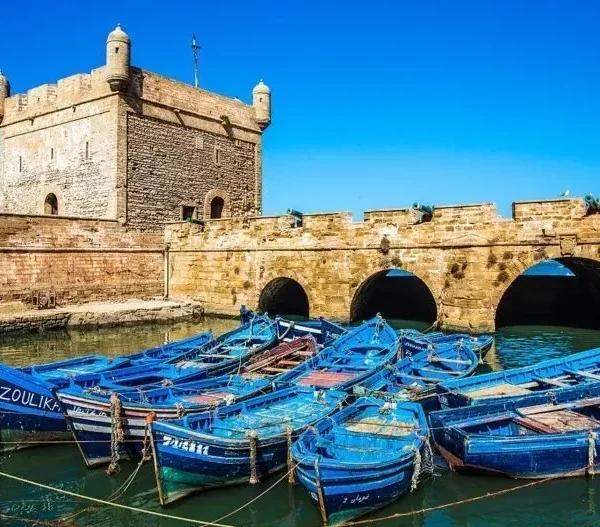
Featured image for Marrakech Essaouira coastal road
Image source: moroccodeserttrips.com
A 15 day tour from Marrakech to Essaouira takes you on a complete loop through Morocco’s most iconic landscapes and cities. Starting in the vibrant souks of Marrakech, you’ll travel north to Fes and Chefchaouen before turning west to the Atlantic coast and finishing in laid-back Essaouira. This route blends desert adventures, imperial cities, mountain valleys, and seaside charm in one unforgettable journey.
Marrakech hits you with color the second you step out of the airport. The red sandstone walls, the smell of cumin and grilled meat drifting from street stalls, and the hum of motorbikes weaving through alleys. But here’s the thing: Marrakech is just the starting line. The real Morocco reveals itself once you leave the city limits and start crossing mountain passes, sleeping under Saharan stars, and wandering the blue-painted lanes of Chefchaouen.
A 15 day tour from Marrakech to Essaouira gives you the time to do all of that without feeling like you’re sprinting through a checklist. Think of it like reading a great novel instead of skimming the back cover. You get the plot, the characters, and the slow, beautiful moments in between.
This guide walks you through the entire route, day by day, with practical tips, honest advice, and a few “did you know” facts sprinkled in to make you sound like a Morocco pro at your next dinner party. Let’s dive in.
Key Takeaways
- Full-circle route: The 15 day tour from Marrakech to Essaouira covers imperial cities, the Sahara Desert, the Atlas Mountains, and the Atlantic coast in one trip.
- Why 15 days? Two weeks is the sweet spot for seeing Morocco’s highlights without rushing, allowing time for cultural stops, scenic drives, and desert nights.
- Starting in Marrakech: Marrakech is the easiest international gateway, with direct flights from Europe, North America, and the Middle East.
- Ending in Essaouira: Essaouira is a relaxed beach town with a French-Moroccan vibe, perfect for unwinding after long travel days.
- Must-see stops: Fes, Chefchaouen, Merzouga Sahara, Todra Gorge, Ait Benhaddou, and the Essaouira medina are the headline destinations.
- Travel style: This route works for small-group tours, private drivers, and independent travelers with a rental car.
- Best seasons: Spring (March-May) and autumn (September-November) offer the most comfortable weather across all regions.
📑 Table of Contents
What Is a 15 Day Tour from Marrakech to Essaouira?
A 15 day tour from Marrakech to Essaouira is a circular route through Morocco that starts in Marrakech, heads north through the Atlas Mountains and imperial cities, loops up to the Mediterranean coast in Chefchaouen, then turns west across the country to finish in the Atlantic port town of Essaouira.
It is the most complete way to see Morocco in two weeks because it covers all four major imperial cities (Marrakech, Fes, Meknes, and a glimpse of Rabat), the Sahara Desert at Merzouga, the dramatic Todra and Dades Gorges, the cinematic kasbah of Ait Benhaddou, and the laid-back beach culture of Essaouira.
Who Is This Tour For?
This route is ideal for:
- First-time visitors who want to see as much of Morocco as possible without planning every detail themselves.
- Culture lovers interested in medinas, mosques, traditional crafts, and Berber heritage.
- Adventure seekers who want camel rides, dune trekking, and mountain drives.
- Photographers chasing blue streets, golden dunes, and coastal light.
- Couples, families, and solo travelers — the route works for everyone, especially when booked with a small-group operator.
Where Does the Tour Start and End?
The tour begins in Marrakech, Morocco’s fourth-largest city and a major international hub with Menara Airport (RAK). It ends in Essaouira, a smaller coastal city about 2.5 hours west of Marrakech by car. Many travelers then return to Marrakech for their flight home, either by bus, taxi, or pre-arranged transfer.
Did you know? Essaouira’s name comes from the Arabic word “Suwaira,” meaning “little fortress.” The Portuguese called it Mogador when they controlled it in the 15th century, and that name stuck in European maps for centuries.
Why Choose a 15-Day Itinerary?
Shorter tours (7-10 days) only scratch the surface. Longer tours (20+ days) start to feel repetitive, especially if you spend too many nights in transit. Fifteen days is the sweet spot.
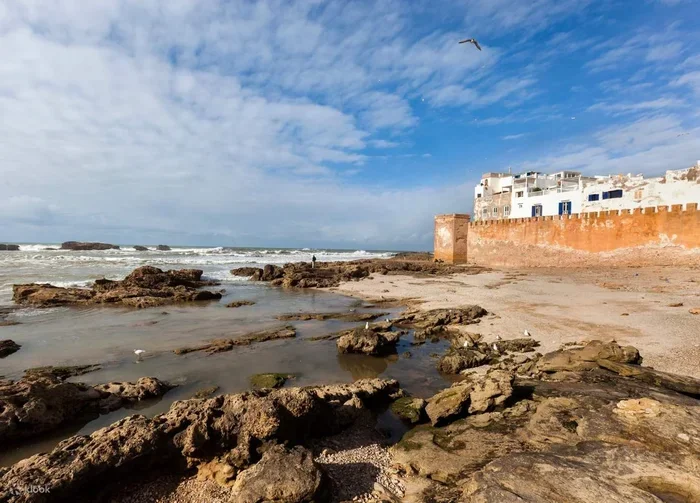
Visual guide about Marrakech Essaouira coastal road
Image source: res.klook.com
Think of it like baking bread. A 7-day trip gives you toast. A 20-day trip over-proofs the dough. Fifteen days? That’s the perfect rise — golden, structured, and full of flavor.
How Much Ground Do You Cover?
In 15 days, you can comfortably travel about 2,000 to 2,500 kilometers (1,250-1,550 miles) without feeling like you’re living in a vehicle. Most driving days are between 3 and 5 hours, with plenty of stops for photos, lunch, and short walks.
Morocco’s roads have improved dramatically over the past decade. The highways between Marrakech, Fes, and Tangier are smooth and modern. The scenic mountain routes, like the Tizi n’Tichka Pass, are slower but incredibly photogenic.
What Makes This Route Special?
The Marrakech-to-Essaouira route in 15 days is unique because it combines three totally different Moroccos:
- Imperial Morocco — the royal cities of Fes, Meknes, and Marrakech with their ancient medinas.
- Natural Morocco — the Sahara Desert, Todra Gorge, and the High Atlas Mountains.
- Coastal Morocco — the Atlantic breezes, seafood, and ramparts of Essaouira.
You go from camelback to beach towel in a few days, and the contrast is what makes the trip memorable.
Day-by-Day Breakdown of the Route
Here’s how a typical 15 day tour from Marrakech to Essaouira unfolds. Times and exact stops can vary based on your tour operator, but this structure works beautifully.
Days 1-2: Arrival and Exploring Marrakech
Most tours start with a welcome dinner and a guided walk through Marrakech’s medina, a UNESCO World Heritage Site since 1985. You’ll visit Jemaa el-Fnaa (the famous main square), the Bahia Palace, the Saadian Tombs, and the Majorelle Garden.
Day 2 is usually a free day to explore on your own. Get lost in the souks, sip mint tea on a rooftop, and try a traditional tagine at a family-run restaurant.
Did you know? Jemaa el-Fnaa was named a “Masterpiece of the Oral and Intangible Heritage of Humanity” by UNESCO in 2001. By night, it transforms into an open-air theater with storytellers, musicians, and snake charmers.
Days 3-4: Crossing the Atlas Mountains to Ait Benhaddou
Leave Marrakech and drive over the Tizi n’Tichka Pass (2,260 meters above sea level) into the Atlas Mountains. The road winds through Berber villages, terraced fields, and dramatic switchbacks.
Stop at Ait Benhaddou, a fortified village (ksar) that has appeared in films like Gladiator, Lawrence of Arabia, and Game of Thrones. You’ll spend the night in a nearby riad or hotel.
Day 4 continues through Ouarzazate (the “Gateway to the Desert”) and into the Dades Valley, famous for its red-rock cliffs and rose gardens.
Days 5-6: Todra Gorge and the Sahara Desert
Wake up early and drive to Todra Gorge, a 400-meter-high canyon that’s a favorite for rock climbers. Then continue to Merzouga, the gateway to the Erg Chebbi dunes.
In Merzouga, you’ll swap your vehicle for a camel and ride into the desert for a night in a Berber camp. Sleep under the stars, eat tajine by the fire, and listen to drums in the silence of the Sahara.
Did you know? Erg Chebbi’s dunes can reach up to 150 meters high. The Sahara covers about 9 million square kilometers — roughly the size of the contiguous United States.
Days 7-8: Desert to Fes via the Middle Atlas
After sunrise over the dunes, you’ll drive north through the Ziz Valley, cross the Middle Atlas Mountains, and pass through Ifrane — known as “Little Switzerland of Morocco” because of its alpine-style architecture.
Arrive in Fes by evening. Day 8 is dedicated to exploring Fes el-Bali, the world’s largest car-free urban area, with its labyrinthine alleys, the Al-Qarawiyyin University (founded in 859 AD, often called the world’s oldest university), and the famous Chouara Tanneries.
Days 9-10: Meknes, Volubilis, and Chefchaouen
Drive to Meknes, one of Morocco’s four imperial cities, and visit the impressive Bab Mansour gate. Continue to the Roman ruins of Volubilis, a UNESCO site with stunning mosaics.
Then head west into the Rif Mountains to Chefchaouen, the famous “Blue City.” Spend the night and a full day wandering its blue-washed streets, browsing artisan shops, and hiking to the Spanish Mosque for sunset.
Did you know? Chefchaouen was painted blue in the 1930s by Jewish refugees, who saw the color as a symbol of the sky and heaven. Today, it’s one of the most photographed places in North Africa.
Days 11-12: Coastal Drive to Essaouira
This is the leg most travelers look forward to. Drive from Chefchaouen south to the Atlantic coast, passing through Rabat (Morocco’s capital) and Casablanca if time allows.
Stop in El Jadida, a Portuguese-era coastal city with a fascinating cistern, then continue to Essaouira. You’ll arrive by late afternoon, just in time for a seafood dinner on the port.
Day 12 is a free day in Essaouira. Walk the ramparts, browse the medina (another UNESCO site), relax on the beach, or take a surf lesson. Essaouira is famous for consistent winds, making it a kite-surfing capital.
Days 13-14: Exploring the Essaouira Region
These days are reserved for slower exploration. Popular options include:
- Visiting an argan oil cooperative, where Berber women extract oil using traditional methods.
- Taking a day trip to the Souss Massa National Park to spot flamingos and bald ibises.
- Horseback riding on the beach at sunset.
- Exploring nearby villages and surfing spots like Taghazout (further south).
Day 15: Return to Marrakech and Departure
Most tours include a transfer back to Marrakech on the final day, either by private car or shared shuttle. The drive takes about 2.5 hours. From Marrakech, you can catch your international flight home.
When Is the Best Time to Take This Tour?
Timing matters more than you’d think. Morocco’s geography means the desert can be freezing at night while the coast stays mild. Picking the right season makes the whole experience smoother.
Spring (March to May)
Spring is the gold standard. Temperatures are warm but not hot, wildflowers bloom in the Atlas Mountains, and the desert is comfortable for camel rides. Average highs sit between 20-28°C (68-82°F) across most regions.
Autumn (September to November)
Autumn is equally fantastic, with similar temperatures and fewer crowds than spring. October is particularly lovely because the desert is still warm enough for evening campfires.
Winter (December to February)
Winter works, but expect cold nights in the Sahara (sometimes below freezing) and shorter days. The Atlas Mountains can get snow, which closes some passes temporarily. The coast stays mild.
Summer (June to August)
Summer is the toughest time. The desert can hit 45°C (113°F), and while Essaouira stays cooler thanks to ocean breezes, the inland driving days can be brutal. If summer is your only option, prioritize coastal time.
Did you know? Morocco receives over 13 million tourists annually as of recent years, and tour operators report that March, April, October, and November are the busiest months.
How to Book and What to Expect
Booking a 15 day tour from Marrakech to Essaouira is straightforward, but a few smart choices can make a big difference.
Small-Group vs. Private Tour
Small-group tours typically have 8-16 travelers and are more budget-friendly. They’re great for solo travelers who want company and a set schedule.
Private tours give you a dedicated driver and guide, flexible stops, and the ability to set your own pace. They cost more but are ideal for couples, families, or anyone wanting a custom feel.
What to Pack
Morocco’s climate varies wildly, so layering is key:
- Clothing: Lightweight long sleeves, a warm jacket for desert nights, modest outfits for mosque visits, and comfortable walking shoes.
- Accessories: Sunglasses, a scarf or shemagh for desert winds, sunscreen, and a reusable water bottle.
- Extras: A small daypack, power adapter (Morocco uses Type C and E plugs), and a headlamp for desert nights.
Budget Expectations
For a 15-day tour:
- Budget travel: $80-120 per day, including hostels, public transport, and local food.
- Mid-range tours: $150-220 per day with comfortable hotels, a private driver, and group activities.
- Luxury tours: $300+ per day with riads, private guides, and upgraded desert camps.
Local Etiquette
Morocco is welcoming, but a few cultural pointers go a long way:
- Ask before photographing people, especially women in rural areas.
- Dress modestly when visiting religious sites.
- Use your right hand for greetings and eating.
- Tip guides and drivers — it’s customary and appreciated.
Final Tips for an Unforgettable Journey
A 15 day tour from Marrakech to Essaouira is more than a vacation. It’s a slow, sensory immersion into one of the most diverse countries on Earth. You’ll taste honey from a roadside stall in the Atlas Mountains, hear the call to prayer echo across Fes, watch the sun rise over the Sahara, and end your trip eating fresh oysters on Essaouira’s ramparts.
To make the most of it:
- Embrace the unplanned. Some of the best moments happen at a roadside stop or a friendly shopkeeper’s invitation.
- Travel slowly. Don’t try to see everything. Pick your highlights and savor them.
- Stay curious. Ask questions, try new foods, and learn a few words of Darija (Moroccan Arabic).
Morocco has been welcoming travelers for centuries, from caravans crossing the Sahara to modern tourists on Instagram. The country hasn’t lost its magic. If anything, it’s gotten better at sharing it. Pack your curiosity, leave your assumptions behind, and let the journey surprise you.
Your 15 day adventure from Marrakech to Essaouira is waiting. The only question left is when you’ll book it.
Frequently Asked Questions
What is included in a 15 day tour from Marrakech to Essaouira?
Most tours include accommodation, transportation in a private or shared vehicle, an English-speaking driver/guide, breakfast daily, and select activities like camel rides and guided medina tours. International flights, lunches, dinners, and personal expenses are usually not included unless stated otherwise.
Is 15 days enough to see Morocco from Marrakech to Essaouira?
Yes, 15 days is the ideal length for this route. It allows enough time to visit Marrakech, Fes, Chefchaouen, the Sahara Desert, Ait Benhaddou, and Essaouira without rushing. Shorter trips miss the desert or the northern coast, while longer trips can feel repetitive.
Do I need a visa for Morocco?
Citizens of many countries, including the US, UK, EU, Canada, and Australia, can enter Morocco visa-free for up to 90 days. Always check the latest requirements with your local Moroccan consulate before traveling.
Is the Sahara Desert safe for tourists?
Yes, the Merzouga and Erg Chebbi region is well-established for tourism and considered very safe. Camel treks are led by experienced Berber guides, and desert camps follow strict safety protocols. Travel with a reputable operator for the best experience.
What is the best month for a 15 day tour from Marrakech to Essaouira?
April, May, October, and November offer the most comfortable temperatures across all regions. These months avoid the extreme heat of summer and the cold desert nights of winter, making them ideal for both inland sightseeing and coastal stops.
Can I customize the itinerary?
Absolutely. Most tour operators offer customizable private tours where you can add stops like Volubilis, Meknes, the Atlas Mountains, or extend time in Chefchaouen. Small-group tours follow a set itinerary, so customization is more limited but sometimes possible for an extra fee.