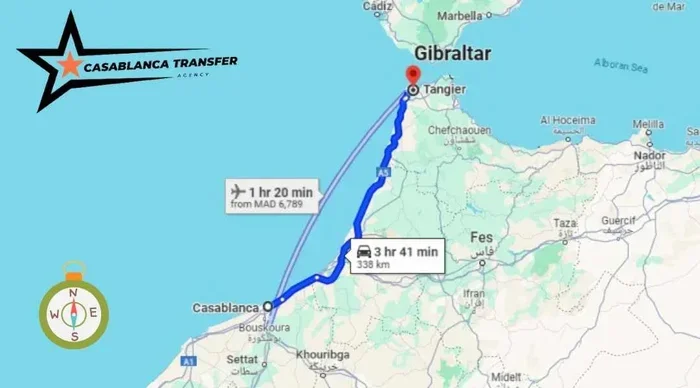
Featured image for Tangier to Casablanca coastline
Image source: casablancatransfer.com
A 4 day tour from Tangier to Casablanca is the perfect introduction to Morocco’s most iconic destinations, blending coastal charm, ancient medinas, imperial grandeur, and modern Moroccan life. This carefully crafted route takes travelers through Chefchaouen’s blue streets, Fez’s cultural heart, Meknes’s imperial ruins, Rabat’s elegant seaside, and finally Casablanca’s cosmopolitan energy. Ideal for first-time visitors, this 4-day journey covers roughly 900 kilometers and offers the best balance between depth of experience and travel efficiency.
Picture yourself standing at the edge of Africa, where the Atlantic Ocean meets the Mediterranean Sea. The salty breeze carries whispers of centuries-old stories, and just beyond the horizon lies a kingdom of blue-washed villages, golden palaces, and bustling markets that have captivated travelers for generations. A 4 day tour from Tangier to Casablanca is your gateway to experiencing the very best of northern Morocco in one unforgettable journey.
Morocco welcomed 14.5 million tourists in 2023, according to the Moroccan Ministry of Tourism, and a significant portion of these travelers began their adventure exactly where you are about to: in Tangier. This northern port city, once a meeting point for spies, artists, and diplomats, now serves as the perfect starting line for exploring Morocco’s imperial cities, coastal wonders, and cultural treasures.
Think of this tour like reading a fascinating book. Each city is a new chapter, each medina a new paragraph, and every interaction with locals a vivid sentence that stays with you long after you return home. By the end of day four, you’ll have collected stories, photos, and memories that most travelers spend weeks trying to gather.
Key Takeaways
- Optimal Duration: Four days provides enough time to experience Morocco’s northern highlights without feeling rushed, covering Tangier, Chefchaouen, Fez, Meknes, Rabat, and Casablanca.
- Distance Covered: The total route spans approximately 900 kilometers (560 miles) by road, with comfortable driving segments between cities.
- Best Travel Season: March through May and September through November offer the most pleasant weather for this predominantly outdoor itinerary.
- UNESCO Heritage Sites: The tour includes three UNESCO World Heritage Sites: the Medina of Fez, the Archaeological Site of Volubilis, and the Rabat Modern Capital.
- Cultural Immersion: Each city offers distinct cultural experiences, from Berber traditions in Chefchaouen to Andalusian influences in Fez.
- Practical Transport: Private guided tours are recommended over public transport for comfort, flexibility, and cultural insights.
- Budget Range: Costs typically range from $400 to $900 per person, depending on accommodation choices and tour inclusions.
📑 Table of Contents
- Why Choose a 4 Day Tour from Tangier to Casablanca?
- Day 1: Tangier to Chefchaouen – The Blue Pearl
- Day 2: Chefchaouen to Fez via Volubilis – History Comes Alive
- Day 3: Fez to Casablanca via Meknes and Rabat – Imperial Cities
- Day 4: Casablanca and Departure – The Modern Face of Morocco
- Planning Your Tour: Practical Tips and Considerations
- Cultural Insights and Etiquette
- Making It Memorable: Beyond the Standard Itinerary
- Final Thoughts: Your Moroccan Journey Awaits
Why Choose a 4 Day Tour from Tangier to Casablanca?
Morocco offers countless travel possibilities, but the route from Tangier to Casablanca stands out as the most comprehensive introduction to the country’s diverse character. In just four days, you transition from Mediterranean coastal culture to Atlantic modernity, passing through mountains, valleys, and historic capitals along the way.
The Geographic Advantage
Tangier sits at the northern tip of Morocco, literally closer to Spain than to any other Moroccan city. Casablanca sits on the western coast, facing the Atlantic Ocean. This geographic positioning creates a natural north-to-south route that passes through Morocco’s most accessible and well-developed regions. Think of it as drawing a line through the heart of Morocco’s tourist-friendly corridor.
The roads connecting these cities are well-maintained, with modern highways connecting Tangier to Fez and Fez to Casablanca. According to the Moroccan National Tourism Office, over 70% of first-time visitors to Morocco travel this exact route, making it the country’s tourism backbone.
Time Efficiency Without Compromise
Four days is the sweet spot for travelers who want depth without exhaustion. A 7-day tour might feel leisurely, but it can also mean spending too much time in transit. A 2-day tour simply cannot do justice to the diversity of experiences available. Four days lets you spend meaningful time in each location while maintaining the excitement of constant discovery.
Did You Know? The average visitor to Morocco spends 6.3 nights in the country, according to 2023 tourism statistics. A 4-day tour from Tangier to Casablanca captures approximately 60% of what most travelers consider Morocco’s “must-see” experiences.
Perfect for Limited Vacation Time
If you’re combining Morocco with a European trip (perhaps arriving from Madrid, which is just a 90-minute ferry ride away), this 4-day format fits perfectly into a week-long vacation. You arrive in Tangier, spend four magical days, and depart from Casablanca’s international airport, which offers direct flights to dozens of global destinations.
Day 1: Tangier to Chefchaouen – The Blue Pearl
Your adventure begins in Tangier, Morocco’s gateway between Europe and Africa. After breakfast at your hotel, you’ll meet your guide and begin the scenic drive south toward Chefchaouen, the famous “Blue City” nestled in the Rif Mountains.
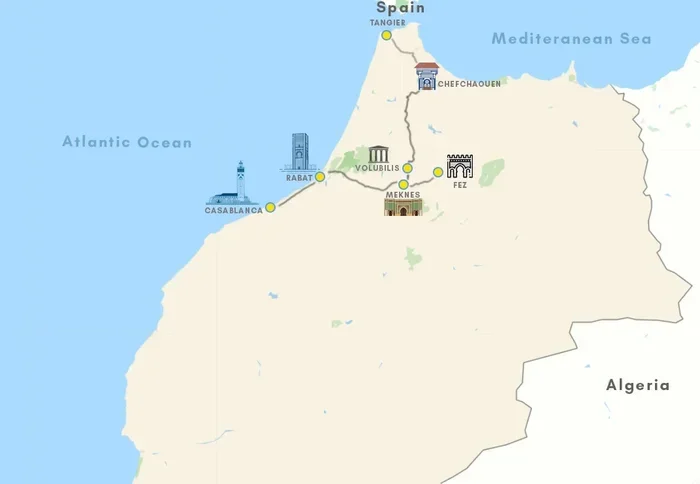
Visual guide about Tangier to Casablanca coastline
Image source: morocco-holiday-packages.com
Morning in Tangier
Before leaving Tangier proper, take time to explore the medina, the Kasbah, and the legendary Café Hafa, where famous writers like Paul Bowles and William Burroughs once sat watching the sunset over the Strait of Gibraltar. The drive to Chefchaouen takes approximately 2.5 hours, covering 115 kilometers of increasingly mountainous terrain.
Did You Know? Tangier’s medina is smaller than those of Fez or Marrakech, making it perfect for a relaxed morning stroll. The city’s international zone was governed by eight different countries from 1923 to 1956, giving it a unique cosmopolitan heritage.
Afternoon in Chefchaouen
Chefchaouen, founded in 1471, welcomes you with its iconic blue-washed streets, colorful flower pots, and laid-back mountain atmosphere. The blue color has several theories behind it: some say it keeps mosquitoes away, others claim it symbolizes the sky and heaven, while locals simply say it represents tranquility.
Spend your afternoon exploring:
- Plaza Uta el-Hammam: The main square with its red-walled kasbah and fountain
- The Grand Mosque: A beautiful example of Moroccan-Andalusian architecture
- Spanish Mosque: A short hike offering panoramic views of the entire blue city
- Local artisan shops: Famous for woven textiles, leather goods, and traditional crafts
Stay overnight in Chefchaouen at a traditional riad, where you’ll experience authentic Moroccan hospitality. Dinner typically includes local specialties like goat cheese, fresh bread, and mint tea served with mountain views.
Evening Recommendations
Chefchaouen transforms in the late afternoon when day-trippers leave and the locals reclaim their streets. This is when the city reveals its true soul. Find a rooftop café, order Moroccan mint tea (the national drink, consumed at 2.5 kilograms per person annually), and watch the blue walls glow in the setting sun.
Day 2: Chefchaouen to Fez via Volubilis – History Comes Alive
Day two begins with a hearty breakfast before hitting the road toward Fez, Morocco’s cultural and spiritual capital. This route covers approximately 250 kilometers and takes about 4 hours with stops, passing through scenic landscapes and one of Morocco’s most important archaeological sites.
Crossing the Middle Atlas
The drive from Chefchaouen to Volubilis takes you through the Middle Atlas Mountains, a region characterized by cedar forests, Berber villages, and dramatic scenery. You’ll notice the temperature dropping as elevation increases, and the landscape shifting from Mediterranean to more alpine vegetation.
This is a perfect analogy for Morocco itself: a country of constant transitions, where geography, climate, and culture shift dramatically within short distances.
Exploring Volubilis
Volubilis, a UNESCO World Heritage Site since 1997, represents the best-preserved Roman ruins in Morocco. Established in the 3rd century BCE, this ancient city served as the capital of the Roman province of Mauretania Tingitana. At its peak, it housed approximately 20,000 inhabitants.
Highlights include:
- The Capitol Building: Imposing columns and intricate floor mosaics
- The Basilica: Religious center with stunning views
- Triumphal Arch: Built around 217 CE to honor Emperor Caracalla
- House of Orpheus: Famous for its mythological floor mosaics
Did You Know? The mosaics at Volubilis have survived 1,800+ years of earthquakes, weather, and time, making them among the best-preserved Roman mosaics in the world outside Italy.
Arrival in Fez
Continue to Fez, arriving in the late afternoon. Check into your riad in or near the medina and prepare for the cultural intensity that awaits. Fez’s medina, known as Fes el-Bali, is the world’s largest car-free urban area, with over 9,000 narrow streets and alleys.
Spend your evening at a traditional restaurant, perhaps trying tagine (a slow-cooked stew named after the conical clay pot it’s cooked in) or pastilla (a savory-sweet pie combining pigeon or chicken with almonds and cinnamon).
Day 3: Fez to Casablanca via Meknes and Rabat – Imperial Cities
Day three is the longest driving day, covering approximately 350 kilometers, but it passes through three of Morocco’s four imperial cities, each offering unique historical significance. Plan for an early start to make the most of this route.
Morning Discovery of Fez
Before leaving Fez, dedicate the morning to exploring its legendary medina. Founded in 789 CE by Idris I, Fez is one of the world’s oldest continuously inhabited cities. The University of al-Qarawiyyin, established in 859 CE, is recognized by Guinness World Records as the oldest continuously operating university in the world.
Must-see sites include:
- Al-Qarawiyyin Mosque and University: The intellectual heart of medieval Morocco
- Chouara Tanneries: The oldest leather tanneries in the world, dating to the 11th century
- Bou Inania Medersa: A stunning 14th-century theological college
- Nejjarine Square: Beautifully restored fountain and artisan workshops
The tanneries work exactly as they did 1,000 years ago. Workers use natural dyes from poppy (red), indigo (blue), saffron (yellow), henna (orange), and mint (green). The smell is strong, but the view from the surrounding leather shops is unforgettable. Think of it as stepping back in time while understanding how global trade worked centuries before industrialization.
Meknes – The Versailles of Morocco
Drive south from Fez to Meknes (about 1 hour, 65 kilometers), the third imperial city on your route. Meknes served as Morocco’s capital during the reign of Sultan Moulay Ismail (1672-1727), who famously kept a stable of 12,000 horses and a harem of 500 women.
Explore:
- Heri es-Souani: Massive granaries and stables that showcase 17th-century engineering
- Bab Mansour: Perhaps Morocco’s most beautiful city gate, featuring intricate zellij tilework
- Mausoleum of Moulay Ismail: One of the few Moroccan religious sites open to non-Muslims
Rabat – The Modern Capital
Continue westward to Rabat (about 2.5 hours, 190 kilometers), Morocco’s political capital since 1912. Rabat, designated a UNESCO World Heritage Site in 2012, blends Islamic, Andalusian, and modern French architectural styles beautifully.
Highlights include:
- Hassan Tower: An incomplete 12th-century minaret that would have been the world’s tallest structure
- Mausoleum of Mohammed V: Stunning mausoleum housing the tombs of King Mohammed V and his sons
- Kasbah of the Udayas: A 12th-century fortress with blue-and-white streets similar to Chefchaouen
- Chellah Necropolis: Roman ruins topped by medieval Islamic structures
From Rabat, continue south to Casablanca (approximately 1.5 hours, 90 kilometers), arriving in the evening.
Did You Know? Morocco has four imperial cities: Fez, Marrakech, Meknes, and Rabat. In just three days on this tour, you’ll have visited three of them, an impressive cultural achievement for such a compact itinerary.
Day 4: Casablanca and Departure – The Modern Face of Morocco
Your final day explores Casablanca, Morocco’s largest city and economic powerhouse. With a population exceeding 3.7 million in the metropolitan area, Casablanca represents Morocco’s modern ambitions while maintaining its historical roots.
Morning: Hassan II Mosque
Begin at the magnificent Hassan II Mosque, one of the few mosques in Morocco open to non-Muslim visitors. Completed in 1993, this architectural masterpiece features:
- The tallest minaret in the world: Standing at 210 meters (689 feet)
- Capacity for 25,000 worshippers inside and 80,000 in the courtyard
- Direct ocean location: Built partly over the Atlantic Ocean, fulfilling a Quranic verse that says “God’s throne was built upon the water”
- Hand-crafted details: 10,000+ artisans worked on its construction over seven years
The mosque’s location is no accident. It represents Morocco’s connection to the sea, a theme that has defined the country since medieval times when Moroccan traders sailed to West Africa, Europe, and beyond.
Exploring Modern Casablanca
After the mosque, explore other Casablanca highlights:
The Corniche: A 12-kilometer coastal promenade with beaches, restaurants, and the Anfa Hotel where Churchill and Roosevelt strategized during World War II.
Mohammed V Square: The administrative heart of the city, surrounded by government buildings and the impressive Palais de Justice.
Habous Quarter: A traditional neighborhood built by the French in the 1930s, blending Moroccan and French architectural styles.
Central Market: A perfect place to buy last-minute spices, argan oil, or Moroccan sweets as gifts for those back home.
Where Time Allows
If your departure flight is in the evening, consider visiting the Museum of Moroccan Judaism, the only museum in the Arab world dedicated to Jewish heritage. Morocco is home to approximately 3,000 Jews, the largest remaining Jewish community in any Arab country, and their 2,000+ year history here is a fascinating part of the nation’s story.
Alternatively, simply relax at Rick’s Café, a restaurant designed to recreate the famous bar from the 1942 film “Casablanca,” and reflect on your journey.
Did You Know? The movie “Casablanca” was actually filmed in a Hollywood studio, not in Casablanca itself. The film premiered in November 1942, just as American forces were liberating North Africa from Axis control, making its release a powerful propaganda moment.
Planning Your Tour: Practical Tips and Considerations
Now that you’ve seen the route, let’s talk about how to make it happen. Planning a 4 day tour from Tangier to Casablanca involves several key decisions that affect your experience quality and budget.
Best Time to Travel
Morocco’s climate varies significantly by region, but for this particular route, the optimal seasons are:
- Spring (March-May): Wildflowers bloom in the mountains, temperatures range 15-25°C (59-77°F)
- Autumn (September-November): Pleasant temperatures, clear skies, harvest season in many regions
- Summer (June-August): Can be hot, especially in Fez and Meknes (often 38-42°C/100-108°F)
- Winter (December-February): Cool, occasionally rainy, snow possible in mountain passes
According to Morocco’s meteorological service, the most popular tourist months are April, May, September, and October. Book accommodations 2-3 months in advance during these peak periods.
Transportation Options
You have several ways to experience this route, each with pros and cons:
Private Guided Tour (Recommended): A private driver-guide provides the most flexibility, comfort, and cultural insight. You can stop whenever something catches your interest, adjust timing as needed, and benefit from local knowledge. Typical cost: $400-700 per person (sharing), $800-1,500 for solo travelers.
Small Group Tour: Joining a scheduled group tour reduces costs and provides social interaction. Typical cost: $350-600 per person for a 4-day tour.
Self-Drive: Renting a car offers maximum independence but comes with challenges: aggressive driving culture, limited parking in medinas, and navigation difficulties in old city areas. Rental costs start at $30-50 per day plus insurance.
Public Transport: Trains and buses connect major cities efficiently, but you’ll miss the flexibility to explore smaller sites like Volubilis or the Spanish Mosque viewpoint. Train travel between major cities is comfortable and affordable ($15-30 per segment).
Accommodation Choices
Morocco offers diverse accommodation options along this route:
Traditional Riads: Historic townhouses converted into boutique hotels, featuring interior courtyards, rooftop terraces, and authentic architecture. Average cost: $60-150 per night.
Luxury Hotels: International chains and Moroccan luxury properties in Casablanca and Rabat. Average cost: $150-400 per night.
Mid-Range Hotels: Comfortable 3-4 star properties with modern amenities. Average cost: $70-120 per night.
Budget Options: Hostels and basic hotels in smaller towns. Average cost: $20-40 per night.
For this 4-day tour, consider staying in riads at least twice (Chefchaouen and Fez) for authentic experiences, then choose hotels in Casablanca for convenience to your departure point.
What to Pack
Smart packing makes your journey smoother. Essentials include:
- Modest clothing: Cover shoulders and knees, especially in religious sites
- Comfortable walking shoes: Medinas involve lots of walking on uneven surfaces
- Layers: Mountain areas can be cool even when coastal cities are warm
- Scarf or shawl: Women should bring one for mosque entries; men often find them useful against sun and dust
- Sunscreen and sunglasses: The Moroccan sun is strong year-round
- Power adapter: Morocco uses Type C and E plugs, 220V electricity
- Cash in small denominations: Many smaller vendors and tipping situations prefer cash (Moroccan Dirhams)
Budgeting Your Trip
Here’s a realistic budget breakdown for a 4 day tour from Tangier to Casablanca (per person, mid-range):
- Accommodation (3 nights): $180-450
- Transportation: $200-500 (private tour) or $100-200 (group tour)
- Meals: $80-150
- Entry fees: $20-40
- Shopping and extras: Variable, $50-200+
Did You Know? Morocco’s currency, the Moroccan Dirham (MAD), is a closed currency, meaning it cannot be legally obtained outside the country. Exchange money at banks, official exchange offices, or your hotel. Keep your exchange receipts; you’ll need them to convert remaining dirhams back to your home currency at departure.
Food Experiences to Seek Out
Moroccan cuisine varies by region, and this tour offers excellent sampling opportunities:
Chefchaouen: Goat cheese, mountain honey, and local tagines featuring seasonal vegetables.
Fez: The birthplace of many Moroccan classics. Try pastilla (savory pie), harira (tomato-based soup), and the famous Fez-style msemen (layered pancake).
Meknes and Rabat: Excellent seafood due to proximity to the Atlantic, plus traditional dishes like rfissa (slow-cooked chicken with lentils).
Casablanca: Modern Moroccan cuisine, international restaurants, and excellent seafood restaurants along the coast.
Remember: Moroccans eat with bread. You’ll receive bread with every meal, and it’s your primary utensil for scooping tagines and salads. This communal style reflects the importance of sharing food in Moroccan culture.
Cultural Insights and Etiquette
Understanding local customs enhances your experience and shows respect for Moroccan culture. Here are essential points to remember:
Greetings and Social Interactions
Moroccans value polite greetings. When meeting someone, a warm handshake accompanied by “Salam alaikum” (peace be upon you) is appropriate. The response is “Wa alaikum salam” (and upon you, peace). With women, wait for them to extend their hand first before offering yours.
If invited to someone’s home, bring a small gift (sweets or flowers are appropriate), remove your shoes at the door, and accept offered tea even if you’re not thirsty. Refusing hospitality can be considered rude.
Photography Etiquette
Always ask permission before photographing people, especially women, religious leaders, and anyone in traditional settings. In return, a small tip (10-20 dirhams) is appreciated. Avoid photographing military installations, government buildings, and police officers.
Religious Sensitivity
Morocco is a Muslim country with progressive religious tolerance. During Ramadan, avoid eating, drinking, or smoking in public during daylight hours. Many restaurants close during the day but open for iftar (breaking the fast) after sunset.
When visiting mosques open to non-Muslims (mainly Hassan II in Casablanca), dress modestly and follow your guide’s instructions carefully.
Bargaining in the Souks
Haggling is expected in traditional markets (souks) but not in fixed-price shops. Start at about 50% of the asking price and negotiate upward. Keep negotiations friendly and patient. Walking away often results in a better offer, but be prepared to actually leave if the price doesn’t meet your budget.
Did You Know? The Fez medina contains over 200 souks organized by trade, with specific streets for carpets, metalwork, leather, spices, and more. This organization dates to the 13th century and represents one of history’s earliest forms of zoning laws.
Making It Memorable: Beyond the Standard Itinerary
While the standard itinerary covers the essentials, these optional experiences can transform your tour from good to unforgettable.
Cooking Classes
Fez is Morocco’s culinary capital, and cooking classes there offer hands-on experiences with traditional recipes. Half-day classes typically include market visits, tagine preparation, and the eating of your creations. Prices range from $30-70 per person.
Hammam Experiences
A traditional hammam (public bath) visit is a quintessential Moroccan experience. For tourists, luxury hotel hammams or spa-oriented traditional hammams offer comfortable introductions to this centuries-old purification ritual. Expect to spend 1-2 hours, with costs ranging from $20-80.
Photography Walks
The light in Morocco, particularly during the “golden hour” before sunset, creates exceptional photography opportunities. Chefchaouen’s blue walls, Fez’s labyrinthine medina, and Casablanca’s coastline all reward photographers with stunning images.
Local Guide Specialties
Consider hiring specialized guides for specific interests:
- Architecture guides: Deep dives into Islamic architectural principles
- Culinary guides: Market tours and food history
- Religious history guides: Understanding Morocco’s Jewish and Islamic heritage
- Artisan guides: Meeting traditional craftsmen and learning techniques
Final Thoughts: Your Moroccan Journey Awaits
A 4 day tour from Tangier to Casablanca is more than a vacation; it’s an immersion into one of the world’s most fascinating cultural crossroads. In just four days, you’ll trace the path of Phoenician traders, Roman soldiers, Berber kings, Andalusian refugees, French colonizers, and modern Moroccans who have all left their marks on this incredible land.
From the moment you arrive in Tangier, where Africa seems to lean toward Europe across the narrow Strait of Gibraltar, you’ll sense that you’re entering a place unlike anywhere else. The medinas, with their organized chaos, will challenge your senses. The call to prayer, five times daily, will become familiar background music. The hospitality, offered freely and generously, will touch your heart.
Morocco’s tourism authority reports that 87% of visitors say they plan to return, and after experiencing this compact but comprehensive route, you’ll understand why. The country’s diversity, hospitality, and beauty create lasting impressions that draw travelers back repeatedly.
As you plan your journey, remember that the best tours balance iconic sights with personal discovery. Leave time to wander the blue alleys of Chefchaouen without a map. Sit in a local café and listen to conversations you don’t understand but feel nonetheless. Let curiosity guide you into side streets and small shops. These unplanned moments often become the most treasured memories.
Whether you’re a first-time visitor to Africa, a seasoned traveler seeking new experiences, or someone combining a European trip with North African adventure, this 4-day Tangier to Casablanca route delivers the perfect introduction to Morocco’s magic. The country’s tourism infrastructure has developed significantly, with improved roads, quality accommodations, and professional guides making travel more accessible than ever before.
Pack your curiosity, bring an empty memory card and a flexible schedule, and prepare for a journey that will redefine your understanding of what travel can be. Morocco awaits, and the 4 day tour from Tangier to Casablanca is the ideal way to meet this remarkable country.
Frequently Asked Questions
Is 4 days enough for a tour from Tangier to Casablanca?
Yes, 4 days is the ideal duration for this route. It provides enough time to experience the key highlights of northern Morocco, including Chefchaouen, Fez, Meknes, and Rabat, without feeling rushed. While longer trips allow for more depth, 4 days strikes the perfect balance between comprehensive sightseeing and travel efficiency for first-time visitors.
What is the best time of year for a 4 day tour from Tangier to Casablanca?
The best times are spring (March through May) and autumn (September through November), when temperatures are mild and crowds are manageable. Summer can be uncomfortably hot, especially in inland cities like Fez where temperatures often exceed 40°C (104°F). Winter is cooler but still viable, with occasional rain and possible snow in mountain areas.
Do I need a guide for this tour?
While independent travel is possible, a local guide is highly recommended, especially for navigating the medinas of Fez and Chefchaouen, which have thousands of unmarked alleys. Guides also provide cultural context, historical information, and help with language barriers. Most travelers find that guided tours significantly enhance their understanding and enjoyment of Morocco.
What is the distance covered on this tour?
The total distance from Tangier to Casablanca via Chefchaouen, Fez, Meknes, and Rabat is approximately 900 kilometers (560 miles). The longest single driving day is Day 3, covering about 350 kilometers from Fez to Casablanca through Meknes and Rabat, with comfortable breaks along the way.
Is it safe to travel from Tangier to Casablanca?
Yes, this route is considered very safe for tourists. Morocco is one of Africa’s most stable countries, with dedicated tourist police in major cities and well-maintained tourist infrastructure. Standard travel precautions apply: watch for petty theft in crowded medinas, keep valuables secure, and use registered guides and official transportation services.
What should I budget for a 4 day tour from Tangier to Casablanca?
A mid-range budget of $100-150 per day covers comfortable accommodation in riads or 3-4 star hotels, meals at local restaurants, entry fees, and private transportation with a driver-guide. Budget travelers can manage on $50-70 daily, while luxury travelers might spend $200-400+ per day. Most organized 4-day tours range from $400-900 per person depending on inclusions and accommodation level.