The best time for a Tangier to Erg Chebbi tour is from October to April, when temperatures are mild and desert skies are clear. This 3-4 day journey crosses stunning landscapes, from coastal Tangier to the golden dunes of Merzouga. Spring (March-May) and autumn (September-November) offer the perfect balance of comfort, fewer crowds, and breathtaking scenery. Summer trips are possible but require careful planning due to extreme desert heat.
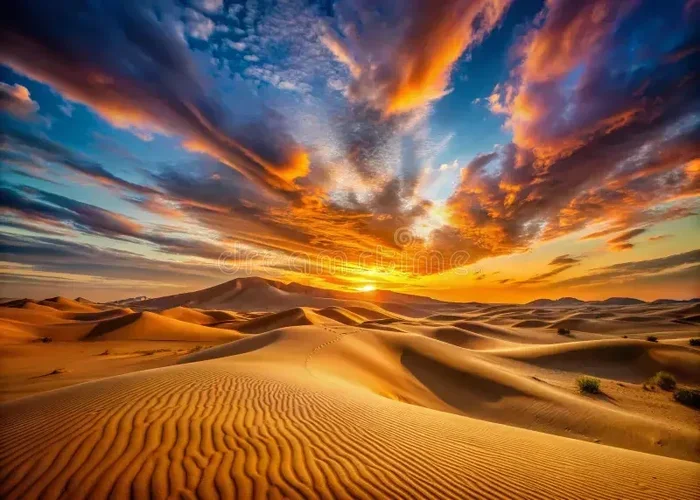
Featured image for Erg Chebbi desert dunes sunset
Image source: thumbs.dreamstime.com
Picture this: you start your morning sipping mint tea in Tangier, with the Atlantic breeze cooling your face. By day three, you’re riding a camel across towering golden dunes as the sun sets over Erg Chebbi. This is the magic of a Tangier to Erg Chebbi tour, one of Morocco’s most epic journeys. But here’s the thing: timing can make or break your adventure.
The Tangier to Erg Chebbi route stretches roughly 900 kilometers (about 560 miles) through some of Morocco’s most diverse landscapes. You’ll cross the Middle Atlas Mountains, weave through cedar forests, pass ancient kasbahs, and finally arrive at the edge of the Sahara Desert. Along the way, you’ll sleep in traditional riads, explore bustling medinas, and meet Berber communities who have called these lands home for centuries.
Choosing the best time for your Tangier to Erg Chebbi tour isn’t just about avoiding bad weather. It’s about catching the desert at its most beautiful, enjoying comfortable temperatures, and experiencing Morocco’s rich culture without the hassle of extreme conditions. Let’s break down everything you need to know to plan the perfect trip.
Key Takeaways
- October to April is optimal: Mild daytime temperatures (20-28°C) make desert exploration comfortable and enjoyable for most travelers.
- Avoid peak summer heat: June through August brings extreme temperatures (40°C+) in Erg Chebbi, making camel treks and camping uncomfortable.
- Spring and autumn are sweet spots: March-May and September-November offer warm days, cool nights, and stunning photographic conditions.
- Ramadan affects availability: Some tour operators adjust schedules during the holy month, so book early and confirm logistics.
- Festival timing matters: Planning around local events like the Merzouga Nomad Festival enriches cultural experiences significantly.
- Booking lead time: Reserve tours 2-3 months ahead for autumn and spring travel to secure the best guides and riads.
- Weather variability: Even in good months, desert nights can drop below 5°C, so pack layered clothing for camping.
📑 Table of Contents
Understanding the Tangier to Erg Chebbi Tour Route
Before diving into timing, let’s understand what this tour actually involves. Think of it as a cross-country adventure that takes you from Morocco’s northern coast all the way to its southeastern desert frontier.
What the Journey Covers
A typical Tangier to Erg Chebbi tour spans 3 to 4 days, though some travelers extend it to 5-7 days for a more relaxed pace. The route generally follows this path:
- Day 1: Tangier to Chefchaouen or Fes, crossing the Rif Mountains
- Day 2: Fes to Merzouga via the Middle Atlas, stopping at Ifrane and the Ziz Valley
- Day 3: Erg Chebbi exploration, camel trekking, and overnight in a desert camp
- Day 4: Return journey through Draa Valley or Todra Gorge
The total distance covers roughly 900-1,000 kilometers depending on your exact route and stops. It’s like driving from New York to Chicago, but with way more interesting scenery and photo stops.
Why Timing Matters So Much
Here’s a simple analogy: imagine planning a beach vacation. Would you go to the Caribbean during hurricane season? Probably not, unless you enjoy empty beaches and dramatic storms. The same logic applies to the Sahara. The desert has its own seasons, and each brings different conditions that affect your comfort, safety, and overall experience.
Did You Know? The Sahara Desert covers over 9 million square kilometers (3.5 million square miles), making it the largest hot desert in the world. Temperatures can swing from below freezing at night to over 50°C (122°F) during summer days. That’s a wild range, and exactly why timing your visit matters so much.
Seasonal Breakdown: When to Go and When to Avoid
Let’s walk through each season so you can see exactly what to expect. This is like checking the weather forecast for your entire vacation, just in broader strokes.
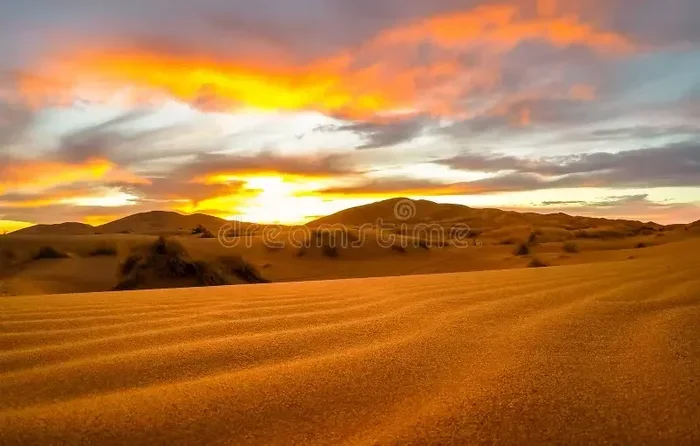
Visual guide about Erg Chebbi desert dunes sunset
Image source: thumbs.dreamstime.com
Winter (December to February)
Winter is one of the best times for a Tangier to Erg Chebbi tour, especially if you prefer cooler temperatures and clear skies.
Desert Conditions: Daytime temperatures in Erg Chebbi hover around 18-22°C (64-72°F), which is absolutely perfect for camel trekking and exploring. Nights, however, can drop to near freezing (0-5°C / 32-41°F). Desert camping in winter means bundling up, but many travelers find the crisp nights part of the adventure.
Advantages:
- Mild daytime temperatures throughout the entire route
- Crystal-clear skies for stargazing in the desert
- Fewer tourists compared to spring and autumn
- Lower prices on tours and accommodations
Disadvantages:
- Cold desert nights require proper gear (warm sleeping bags are essential)
- Shorter daylight hours limit exploration time
- Some mountain passes may have occasional snow or ice
Best For: Budget travelers, photographers seeking dramatic desert skies, and anyone who prefers moderate temperatures over heat.
Spring (March to May)
Spring is widely considered the sweet spot for a Tangier to Erg Chebbi tour. Here’s why experienced travelers keep coming back during these months.
Desert Conditions: Temperatures gradually warm up, ranging from 22°C in March to 32°C in May. The desert comes alive with subtle beauty, and the lighting is absolutely gorgeous for photography. Wildflowers bloom in the Atlas Mountains during March and April, adding unexpected color to your journey.
Advantages:
- Comfortable temperatures across all regions
- Beautiful wildflower displays in the Middle Atlas (especially March-April)
- Long daylight hours (12-13 hours) for maximum exploration
- Pleasant evenings for outdoor dining and campfires
Disadvantages:
- Peak tourist season means busier attractions and higher prices
- Book accommodations 2-3 months in advance
- Occasional spring sandstorms (though rare)
Did You Know? March is when the Merzouga Nomad Festival typically takes place, celebrating Saharan culture with music, camel races, and traditional sports. Timing your tour around this festival adds an unforgettable cultural layer to your trip.
Summer (June to August)
Summer is the most challenging time for a Tangier to Erg Chebbi tour. It’s not impossible, but it requires serious preparation and realistic expectations.
Desert Conditions: This is when the Sahara earns its reputation. Daytime temperatures regularly hit 40-45°C (104-113°F), and sand surfaces can reach 60°C (140°F). It feels like walking on a hot stovetop, literally.
Advantages:
- Lowest prices and fewest tourists
- Longest daylight hours
- Hot, dry conditions mean almost zero chance of rain
Disadvantages:
- Extreme heat makes midday activities dangerous
- Dehydration risk is serious, even for healthy travelers
- Desert camping can be uncomfortably hot even at night (25-30°C / 77-86°F)
- Limited tour options, as some operators reduce summer schedules
Recommendation: If you must travel in summer, choose early morning and late afternoon activities. Spend midday hours in air-conditioned riads or shaded oases. Drink water constantly. Some experienced travelers actually love summer for the solitude, but it’s definitely not for everyone.
Autumn (September to November)
Autumn rivals spring as the best time for a Tangier to Erg Chebbi tour. Many seasoned Morocco travelers actually prefer autumn for its unique advantages.
Desert Conditions: September starts hot (35°C / 95°F) but cools quickly into October (28°C / 82°F) and November (22°C / 72°F). The scorching summer heat breaks, and the desert transforms into a more comfortable playground.
Advantages:
- Gradually cooling temperatures from September through November
- Crowds thin out after summer (except during October’s peak)
- Excellent visibility for photography and stargazing
- Comfortable desert camping temperatures return by late October
Disadvantages:
- Early September can still be quite hot
- October is popular, so advance booking is essential
- Occasional late-season sandstorms
Best For: Travelers seeking a balance between good weather and moderate crowds. Late October to November is particularly magical, with comfortable days, cool nights, and that gorgeous golden light photographers dream about.
Month-by-Month Recommendations
Let’s get specific. Here’s a detailed breakdown to help you choose the perfect month for your Tangier to Erg Chebbi tour.
January and February
These are the coldest months, but still excellent for desert travel if you pack properly. Expect daytime highs around 18-20°C in Erg Chebbi and nighttime lows near freezing. Bring a warm sleeping bag (most desert camps provide them, but check). This is budget season, so you’ll find great deals on tours.
March and April
Considered peak season for good reason. Temperatures are ideal (22-28°C days, 8-12°C nights), wildflowers bloom in the mountains, and daylight stretches long. Book tours and desert camps at least 2 months ahead. This is when you’ll see the most diverse mix of travelers.
May
A transitional month with warming temperatures (28-32°C). Still very comfortable, but starting to heat up. Crowds thin slightly after Easter. Good value for money compared to peak March-April.
June, July, and August
The challenge months. Only recommended for experienced desert travelers or those on tight budgets. If you go, prioritize early morning desert activities (sunrise camel treks are magical) and afternoon rest in air-conditioned spaces.
September
Still hot at the start (35°C), but improving rapidly. By late September, temperatures settle into the comfortable 30°C range. Bookings start picking up for autumn season.
October
One of the best months, period. Temperatures hover around 25-28°C during the day and 12-15°C at night. Perfect for everything from camel trekking to stargazing. This is second peak season, so book early.
November
Underrated and wonderful. Temperatures cool to 20-22°C during the day, crowds thin out, and the desert takes on a serene, peaceful quality. Excellent for photographers seeking dramatic skies and solitude.
December
Back to winter conditions, but with holiday cheer. Christmas and New Year see a slight uptick in tourists, but it’s nothing like European summer crowds. Expect cool days (18-20°C) and cold nights (5-8°C).
Weather and Climate Deep Dive
Understanding the specific weather patterns helps you pack smart and plan realistic activities. Let’s look at what you’ll actually experience on the ground.
Temperature Variations Across the Route
Your Tangier to Erg Chebbi tour crosses multiple climate zones, which is part of what makes it so fascinating. Here’s how temperatures vary:
- Tangier (Start): Mediterranean climate, mild year-round (10-28°C depending on season)
- Chefchaouen or Fes (Stop 1): Continental influence, cooler winters (5-15°C) and warm summers (25-35°C)
- Middle Atlas Mountains: Significantly cooler, especially at elevation. Ifrane often sees snow in winter.
- Erg Chebbi (Desert): Extreme variations, from below freezing winter nights to 45°C summer days
This temperature range means you need to pack for multiple climates. Think layers, like an onion. A base layer, a mid-layer for warmth, and a shell for wind and sand protection.
Rain and Sandstorms
Rain is rare in the Sahara (less than 100mm annually), but when it happens, it’s usually between November and March. Mountain regions along your route receive more precipitation, especially the Middle Atlas.
Sandstorms (Cheggui): These dramatic events happen sporadically, usually during transitional seasons (spring and autumn). They can reduce visibility dramatically and make travel temporarily impossible. Most tours monitor weather forecasts and adjust routes to avoid the worst conditions.
Did You Know? The Saharan air layer carries dust across the Atlantic Ocean all the way to the Caribbean and Amazon basin. This dust actually fertilizes the Amazon rainforest. So when you visit the Sahara, you’re seeing the source of an incredible natural phenomenon that affects ecosystems thousands of kilometers away.
Best Times of Day for Activities
Regardless of season, certain times of day are consistently better for desert activities:
- Sunrise (6:00-8:00 AM): Cool temperatures, gorgeous light, calm winds. Perfect for camel treks.
- Late Afternoon (4:00-6:00 PM): The magic hour. Temperatures drop, golden light paints the dunes, and you can experience sunset from the dunes.
- Night (9:00 PM onwards): Stargazing opportunities are incredible in the desert due to minimal light pollution. October through April offers the clearest skies.
Midday (11 AM – 3 PM) is when you want to be resting, especially in warmer months. Even in winter, the midday sun can be intense.
Booking Tips and Practical Considerations
Now that you know when to go, let’s talk about how to make it happen smoothly. These practical tips save you money, time, and headaches.
How Far Ahead to Book
Your booking timeline depends on when you’re traveling:
- Peak Season (March-May, October): Book 2-3 months ahead for tours and 1-2 months for desert camps
- Shoulder Season (February, June, September, November): Book 4-6 weeks ahead
- Off-Season (July-August, December-January): 2-3 weeks is usually sufficient, but still confirm availability
Choosing the Right Tour Length
Tour durations vary based on your travel style:
- 3 Days/2 Nights: Fast-paced, covers the essentials. Good for first-time visitors with limited time.
- 4 Days/3 Nights: The sweet spot. Allows time for Chefchaouen, Fes, and a full desert experience without rushing.
- 5-7 Days: Relaxed pace with detours to Todra Gorge, Draa Valley, or Ait Ben Haddou. Best for photography enthusiasts and slow travelers.
Think of it like choosing between a quick weekend trip and a full vacation. Both are valid, but they deliver different experiences.
What to Pack Regardless of Season
Here’s your desert survival kit, even if you’re visiting in mild weather:
- Sun protection (hat, sunglasses, SPF 30+ sunscreen)
- Lightweight long-sleeved shirts and pants for sun and sand protection
- Warm layers for cool desert nights (fleece or light jacket)
- Comfortable walking shoes or sandals
- Scarf or shemagh for wind and sand protection
- Reusable water bottle (hydration is critical)
- Camera with extra batteries (cold nights drain them fast)
- Headlamp for desert camp navigation
Considering Ramadan and Religious Holidays
If you’re traveling during Ramadan (dates shift each year based on the lunar calendar), expect some adjustments. Many restaurants close during daylight hours, and the pace of life slows down. However, this can also be a beautiful time to experience Moroccan culture, as evenings come alive with special meals and celebrations.
Major holidays like Eid al-Fitr and Eid al-Adha also affect tour availability and pricing. Book well in advance if your travel dates overlap with these periods.
Sample Itineraries for Different Seasons
Let’s put this all together with practical itinerary examples. These templates show you exactly how timing affects your experience.
4-Day Autumn Itinerary (October Recommended)
Day 1: Tangier to Fes
- Morning departure from Tangier (8:00 AM)
- Drive through Rif Mountains (3 hours)
- Optional stop in Chefchaouen (blue pearl of Morocco)
- Afternoon arrival in Fes, evening medina exploration
- Overnight in Fes riad
Day 2: Fes to Merzouga
- Early morning departure to beat traffic
- Stop in Ifrane (Morocco’s Switzerland) and cedar forests
- Lunch in Midelt or Errachidia
- Afternoon drive through Ziz Valley with stunning palm groves
- Evening arrival at desert edge, camel trek to camp
- Desert camp overnight under stars
Day 3: Erg Chebbi Exploration
- Sunrise camel trek or 4×4 desert tour
- Visit Khamlia village for Gnawa music
- Lunch with a Berber family
- Afternoon at the dunes (swimming, relaxing)
- Second night in desert camp or upgrade to luxury camp
Day 4: Return via Todra Gorge or Draa Valley
- Scenic return route through Todra Gorge
- Optional stop at Ait Ben Haddou (UNESCO site)
- Evening arrival in Marrakech or Ouarzazate
3-Day Winter Itinerary (December-February)
Winter tours move faster due to shorter days and colder nights:
- Day 1: Tangier to Fes (longer driving day to maximize desert time)
- Day 2: Fes to Merzouga, camel trek at sunset, desert camp with warm sleeping bags
- Day 3: Sunrise in the desert, return journey via Errachidia
Winter tours often include heated desert camps and extra blankets. Some travelers actually prefer winter for the dramatic contrast between hot tea and freezing desert nights.
Final Thoughts: Making Your Decision
Choosing the best time for your Tangier to Erg Chebbi tour ultimately comes down to your priorities. Are you chasing comfortable temperatures? Spring and autumn deliver. Looking for budget-friendly options? Winter months offer the best deals. Want to avoid crowds? November or February strike the perfect balance.
Here’s my final recommendation: if you have flexibility, target late October or early November. The summer heat has broken, crowds have thinned slightly after the October peak, and the desert is at its most photogenic. Temperatures are warm but not hot during the day, cool but not cold at night. It’s like the desert is showing off just for you.
However, any time between October and April will reward you with an incredible experience. The Sahara has been welcoming travelers for centuries, and each season offers its own unique magic. The key is understanding what you want from your journey and choosing accordingly.
Whether you’re watching the sunrise paint the dunes gold, listening to traditional Berber music around a campfire, or simply marveling at stars you’ve never seen before, the Tangier to Erg Chebbi tour delivers memories that last a lifetime. Choose your timing wisely, pack appropriately, and prepare for one of Morocco’s most spectacular adventures.
Your Sahara story is waiting. All you need to do is pick the perfect time to write it.
Frequently Asked Questions
What is the absolute best month for a Tangier to Erg Chebbi tour?
October and April are widely considered the best months. Temperatures are ideal (20-28°C during the day), crowds are manageable, and weather conditions are stable throughout the entire route. These months offer the perfect balance of comfort, accessibility, and stunning scenery for your desert adventure.
Can I do the Tangier to Erg Chebbi tour in summer?
Yes, but it’s challenging. June through August brings extreme heat to Erg Chebbi (40-45°C / 104-113°F during the day). If you must travel in summer, schedule activities for early morning and late afternoon, stay well-hydrated, and choose air-conditioned accommodations. Some travelers love summer for the solitude, but it’s not recommended for first-time visitors.
How cold does it get in the desert at night?
Desert temperatures drop dramatically after sunset regardless of season. In winter (December-February), nights can reach 0-5°C (32-41°F) or even below freezing. In summer, nights are warmer but still cool (20-25°C / 68-77°F). Always pack warm layers for desert camping, even if your daytime temperatures are hot.
Is it safe to travel to Erg Chebbi during Ramadan?
Traveling during Ramadan is generally safe and can offer unique cultural insights. However, some restaurants and shops may have limited hours during the day, and the pace of life slows down. Book tours in advance and confirm your operator’s Ramadan schedule. The evening iftar meals and festive atmosphere make Ramadan a special time to visit for culturally curious travelers.
How many days do I need for the Tangier to Erg Chebbi tour?
Most travelers need 3-4 days for the complete experience. A 3-day tour is fast-paced but covers the essentials. A 4-day tour allows more time for stops at Chefchaouen, Fes, and the Ziz Valley without rushing. For a relaxed pace with additional stops at Todra Gorge or Ait Ben Haddou, consider 5-7 days.
Do I need to book desert camps in advance?
Yes, especially during peak season (March-May, October). Standard desert camps can fill up 1-2 months ahead during these periods. Luxury camps often require 2-3 months advance booking. During off-season (July-August, December-January), you can usually book 2-3 weeks ahead, but advance reservations still ensure better rates and camp selection.