Featured image for Morocco tour Tanger Casablanca
Image source: photos.smugmug.com
A 13-day tour from Tangier to Casablanca is the perfect way to experience Morocco’s incredible diversity in one unforgettable journey. This extended itinerary covers everything from the blue streets of Chefchaouen to the golden dunes of the Sahara Desert, the imperial cities of Fes and Meknes, and the Atlantic coast. Designed for travelers who want depth, not just snapshots, this tour balances culture, adventure, and relaxation across two weeks of discovery.
Imagine waking up in a bustling medina, riding a camel into the sunset over golden sand dunes, sipping mint tea in a mountain village, and ending your day listening to waves crash against the Atlantic coast. That is exactly what a 13-day tour from Tangier to Casablanca offers. It is not just a trip. It is a complete Moroccan experience packed into two incredible weeks.
Morocco is a country of contrasts. Ancient traditions live side by side with modern life. Snow-capped mountains meet endless deserts. Loud souks give way to peaceful coastal towns. In just 13 days, you can see all of this and more. The route from Tangier in the north to Casablanca in the south-centre takes you through the heart of the country, covering every major highlight you have ever dreamed of visiting.
Whether you are a first-time visitor or a returning traveler, this itinerary is designed to maximize your time and minimize stress. Everything is planned for you. You just need to show up, soak it in, and enjoy the ride. Let us walk you through everything you need to know about this amazing 13-day adventure.
Key Takeaways
- Two-Week Immersion: A 13-day tour from Tangier to Casablanca gives you enough time to explore Morocco’s top destinations without feeling rushed.
- Full Geographic Coverage: The route spans from the northern Mediterranean coast to the Atlantic south, covering mountains, deserts, cities, and coastline.
- Cultural Depth: You will visit four imperial cities (Rabat, Meknes, Fes, and Marrakech) plus the stunning blue city of Chefchaouen.
- Sahara Desert Included: A camel trek and overnight in the Erg Chebbi dunes is the highlight of the journey.
- Best Travel Seasons: Spring (March to May) and autumn (September to November) offer the most comfortable weather conditions.
- Group vs. Private: Both options are available, with private tours offering more flexibility and personalized pacing.
- Budget-Friendly Option: Multi-day tours like this often cost less per day than independent travel when you factor in transport, guides, and accommodation.
📑 Table of Contents
- What is a 13-Day Tour from Tangier to Casablanca?
- When is the Best Time to Take This Tour?
- Where Does This Tour Go? The Full Itinerary Breakdown
- Why Choose a Guided Tour Instead of Traveling Independently?
- How Much Does a 13-Day Tour from Tangier to Casablanca Cost?
- What Should You Pack for This Tour?
- Tips for Getting the Most Out of Your Tour
- Common Concerns and How to Handle Them
- Why This Tour Leaves a Lasting Impression
What is a 13-Day Tour from Tangier to Casablanca?
A 13-day tour from Tangier to Casablanca is a guided, multi-city journey that takes you across Morocco from its northernmost major city to its largest Atlantic metropolis. Think of it like a curated road trip where every stop has been chosen to give you the richest possible experience of Moroccan culture, landscape, and history.
Who is This Tour For?
This tour is perfect for travelers who want to see Morocco in depth. If you are the type of person who likes to truly understand a place rather than just snap a quick photo and move on, this is for you. It is also great for:
- First-time visitors who want a complete overview of Morocco.
- Couples and honeymooners looking for a romantic, varied experience.
- Families who want safe, organized travel with kids.
- Solo travelers who want the safety and companionship of a group.
- Photographers and culture lovers who need time to capture and absorb each location.
What Makes This Route Special?
The Tangier to Casablanca route is special because it follows a natural north-to-south flow. It starts where Africa meets Europe, crosses through the Rif Mountains, dips into the Sahara, climbs over the Atlas Mountains, and finishes on the Atlantic coast. Few tours in the world offer this much geographic and cultural variety in just 13 days.
When is the Best Time to Take This Tour?
Timing can make or break your Moroccan adventure. The good news is that Morocco has a varied climate, so there is almost always a good time to visit somewhere along the route.
Visual guide about Morocco tour Tanger Casablanca
Image source: cdn.kimkim.com
Spring (March to May)
Spring is widely considered the best season for this tour. Temperatures are mild, ranging from 65 to 80°F (18 to 27°C) in most regions. The landscapes are green and blooming, especially in the Atlas Mountains. Wildflowers carpet the valleys, and the desert is not yet scorching hot.
Autumn (September to November)
Autumn is the second-best window. The summer heat fades, and the desert becomes pleasant again. The coastal cities like Essaouira and Casablanca enjoy mild temperatures. This is also harvest season, so you will see markets full of fresh produce and dates.
Why Avoid Summer and Winter?
Summer (June to August) can be brutal, especially in the Sahara, where temperatures exceed 115°F (46°C). Winter (December to February) brings snow to the Atlas Mountains, which can close mountain passes and disrupt travel plans. The Rif Mountains in the north also get cold and rainy in winter.
Where Does This Tour Go? The Full Itinerary Breakdown
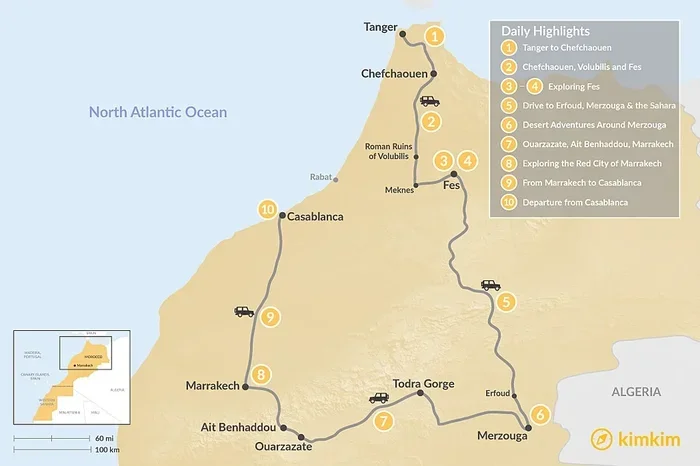
Now for the fun part. Let us walk through the 13-day route, day by day, so you know exactly what to expect. Think of it as a movie preview before the main feature.
Day 1-2: Tangier and Chefchaouen
Your journey begins in Tangier, the gateway between Africa and Europe. This port city has been a crossroads of civilizations for centuries. You will explore the medina, visit the famous Hercules Caves, and stand at the point where the Mediterranean meets the Atlantic. On day two, you will travel to Chefchaouen, the famous “Blue City” nestled in the Rif Mountains.
Did you know? Chefchaouen’s blue walls were painted by Jewish refugees in the 1930s. The tradition stuck, and today it is one of the most photographed places in the world. The blue color is said to symbolize the sky and heaven, and it also helps repel mosquitoes.
Day 3-4: Fes, the Cultural Capital
From Chefchaouen, you head to Fes, the spiritual and cultural heart of Morocco. Fes is home to the world’s oldest continuously operating university, the University of al-Qarawiyyin, founded in 859 AD. That is older than most countries. The Fes el-Bali medina is a UNESCO World Heritage Site and a living museum of medieval Islamic architecture.
You will spend two full days here, which is the right amount of time to explore the labyrinthine alleys, visit the famous tanneries, and watch artisans at work in their centuries-old workshops. Trust me, Fes is a city that rewards slow exploration.
Day 5: Ifrane and the Middle Atlas
On day five, you travel through the Middle Atlas Mountains, stopping at Ifrane, often called the “Switzerland of Morocco.” This small town is famous for its clean streets, alpine-style houses, and the fact that it once had a ski resort. You will also visit the Azrou Cedar Forest, where wild Barbary macaques roam freely.
Day 6-7: Sahara Desert Adventure
This is the part most travelers dream about. You will drive south toward the Sahara, passing through the stunning Ziz Valley and arriving at Merzouga, the gateway to the Erg Chebbi dunes. Here, you will swap your vehicle for a camel and ride into the desert for a night under the stars in a traditional Berber camp.
Did you know? The Sahara Desert covers an area larger than the continental United States. Yet, the Erg Chebbi dunes in Morocco can reach heights of up to 500 feet (150 meters). That is taller than a 40-story building.
Day 8-9: Todra Gorge and Dades Valley
After the desert, you will travel through dramatic landscapes. Todra Gorge is a massive canyon with walls rising 400 meters on either side. It is a paradise for rock climbers and hikers. The Dades Valley, with its red rock formations and ancient kasbahs, feels like stepping onto another planet.
Day 10: Ouarzazate and Ait Benhaddou
Day ten takes you to Ouarzazate, known as the “Hollywood of Africa” because of its famous film studios. Nearby, you will visit Ait Benhaddou, a stunning fortified village (ksar) that has been featured in movies like Gladiator, Lawrence of Arabia, and Game of Thrones. It is another UNESCO World Heritage Site and one of the most iconic sights in Morocco.
Day 11-12: Marrakech, the Red City
From Ouarzazate, you cross the High Atlas Mountains via the stunning Tizi n’Tichka pass and arrive in Marrakech. This vibrant city is a sensory overload in the best way possible. You will visit the famous Jemaa el-Fnaa square, where storytellers, musicians, and food vendors create an atmosphere unlike anywhere else on Earth.
You will have two full days to explore. Do not miss the Majorelle Garden, the Bahia Palace, and the Saadian Tombs. And make sure to try the street food. A steaming bowl of harira soup or a fresh mint tea on a rooftop terrace is an experience you will remember forever.
Day 13: Casablanca and Departure
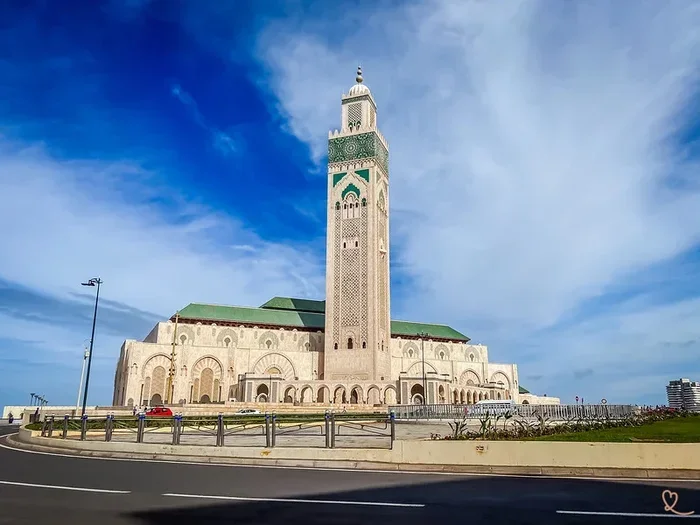
Your final day takes you to Casablanca, Morocco’s largest city and economic capital. Here, you will visit the magnificent Hassan II Mosque, one of the few mosques in Morocco open to non-Muslim visitors. It has the tallest minaret in the world at 689 feet (210 meters). After exploring the city, your tour concludes.
Why Choose a Guided Tour Instead of Traveling Independently?
Some travelers love the freedom of independent travel. Others prefer the structure and ease of a guided tour. For a route this complex, a guided tour has some major advantages.
Logistics Made Simple
Morocco’s roads can be confusing, and distances between cities are long. A guided tour handles all the driving, navigation, and timing. You do not have to worry about missing a turn or dealing with a flat tire in the middle of nowhere. You just sit back and enjoy the scenery.
Local Knowledge
Your guide is not just a driver. They are a cultural ambassador. They know the best spots for photos, the hidden cafes locals love, and the stories behind every monument. This kind of insider knowledge turns a simple sightseeing trip into a rich cultural experience.
Safety and Comfort
Morocco is a very safe country for tourists, but having a guide who speaks Arabic, Berber, French, and English adds a layer of comfort. You will not get lost in the medinas, and you will avoid common tourist traps.
Cost-Effectiveness
When you add up the cost of rental cars, fuel, hotel bookings, entrance fees, and guide services, a multi-day tour is often cheaper than going it alone. Plus, tour operators get group discounts that independent travelers do not.
How Much Does a 13-Day Tour from Tangier to Casablanca Cost?
Tour prices vary based on several factors. Let us break it down so you know what to expect.
Standard Group Tour
A budget-friendly group tour typically costs between $1,200 and $1,800 per person. This usually includes accommodation, transport, breakfast and dinner daily, a guide, and entrance fees to major attractions. It does not usually include lunch, drinks, or personal shopping.
Mid-Range Private Tour
A private tour for two people in mid-range hotels ranges from $2,500 to $4,000 total. This option gives you flexibility, better hotels, and a more personalized experience.
Luxury Tour
Luxury tours with five-star riads and upgraded desert camps can cost $5,000 to $8,000 per person. These tours often include extras like cooking classes, hot air balloon rides, or private guided medina tours.
Did you know? Morocco’s tourism industry contributes about 7% of the country’s GDP. The government has been investing heavily in tourism infrastructure, which means better roads, more English-speaking guides, and higher service standards across the board.
What Should You Pack for This Tour?
Packing smart is key to enjoying this trip. You will experience desert heat, mountain cold, and everything in between. Here is a simple checklist.
Clothing
- Light, breathable fabrics for daytime (cotton or linen).
- A warm jacket or fleece for the mountains and desert nights.
- A scarf or shemagh for sun and sand protection.
- Modest clothing for visiting religious sites (covered shoulders and knees).
- Comfortable walking shoes with good grip for medina alleys.
- Sandals for relaxing at the hotel or desert camp.
Essentials
- Sunscreen and sunglasses (the sun is strong, even in winter).
- A reusable water bottle to stay hydrated.
- A power bank for your phone and camera.
- Basic first-aid kit with motion sickness pills (the mountain roads are winding).
- Cash in small denominations for tips and small purchases.
- A universal power adapter (Morocco uses Type C and E plugs).
Pro Tips
Pack light. Most hotels offer laundry services for a small fee, and you will thank yourself when you are hauling your bag through narrow medina streets. A small daypack for daily excursions is also a great idea.
Tips for Getting the Most Out of Your Tour
Here are some tried-and-true tips to make your 13-day adventure even better.
Embrace the Culture
Morocco is a Muslim country with deep traditions. Respect local customs. Learn a few words of Arabic like “salaam alaikum” (hello) and “shukran” (thank you). Dress modestly, especially in rural areas. These small gestures go a long way in earning local respect.
Try the Food
Do not stick to what you know. Moroccan cuisine is one of the most flavorful in the world. Try tagine (slow-cooked stew), couscous, pastilla (a sweet and savory pie), and of course, mint tea. Street food is generally safe, but stick to busy stalls where food is cooked fresh.
Bargain in the Souks
Haggling is part of the shopping experience in Morocco. Start at about 40-50% of the asking price and negotiate up from there. Always smile, be respectful, and remember it is a conversation, not a fight. If the price is too high, walk away. More often than not, you will be called back with a better offer.
Stay Connected
Buy a local SIM card at the airport. It costs about $5 and gives you data for your whole trip. This is helpful for Google Maps, translation apps, and staying in touch with family.
Take Time to Disconnect
On the flip side, the Sahara Desert is the perfect place to unplug. Put the phone away, look up at the stars, and enjoy the silence. There is no Wi-Fi in the dunes, and that is the whole point.
Common Concerns and How to Handle Them
It is normal to have questions or concerns before booking a tour like this. Let us address the most common ones.
Is Morocco Safe for Tourists?
Yes. Morocco is one of the safest countries in North Africa for tourists. Violent crime against visitors is extremely rare. The main thing to watch out for is petty theft in crowded areas, just like in any major tourist destination. Use common sense, keep your valuables secure, and you will be fine.
Will the Language Barrier Be a Problem?
In major cities and tourist areas, many people speak French and some English. In rural areas, Arabic and Berber are more common. Your tour guide will handle most communication, but learning a few basic phrases in Arabic and French is a nice touch.
What About Dietary Restrictions?
Vegetarians will find plenty of options in Morocco, especially dishes like vegetable tagine, lentils, and salads. Vegan options are a bit more limited but still available. If you have specific allergies, inform your tour operator in advance so they can accommodate you.
Can Children Join This Tour?
Absolutely. Many families take this exact route. Just note that the long driving days can be tiring for young children. If you are traveling with kids, consider a private tour so you can adjust the pace and add more stops.
Why This Tour Leaves a Lasting Impression
There is a reason Morocco is one of the most popular travel destinations in the world. It is not just the sights. It is the feeling. The call to prayer echoing through ancient medinas. The smell of spices in the air. The warmth of a stranger offering you tea. The silence of the desert at night. These are the kinds of experiences that stay with you long after you have gone home.
A 13-day tour from Tangier to Casablanca is more than a vacation. It is a journey through time, across landscapes, and into the heart of a culture that has been welcoming travelers for centuries. Whether you are hiking in the Atlas Mountains, wandering through the alleys of Fes, or watching the sun set over the Sahara, every day brings something new and unforgettable.
So, if you are ready for an adventure that combines history, culture, nature, and a touch of magic, this is the trip for you. Book your tour, pack your bags, and prepare for the trip of a lifetime. Morocco is waiting.
Frequently Asked Questions
What is included in a typical 13-day tour from Tangier to Casablanca?
Most tours include accommodation, daily breakfast and dinner, air-conditioned transport, an English-speaking driver-guide, camel trek in the Sahara, and entrance fees to major attractions. Lunch, drinks, and personal expenses are usually not included.
Is the Sahara Desert safe for tourists?
Yes, the Sahara region in Morocco is very safe for tourists. The Berber communities are welcoming, and tour operators follow strict safety standards. You will stay in a well-equipped desert camp with proper facilities.
Do I need a visa for Morocco?
Citizens of most Western countries, including the US, UK, Canada, and EU nations, do not need a visa for stays under 90 days. You just need a valid passport with at least six months of validity remaining.
What type of accommodation can I expect?
Accommodation varies by tour package. Budget tours use 3-star hotels and standard desert camps. Mid-range tours use 4-star riads (traditional Moroccan guesthouses) and upgraded desert camps. Luxury tours feature 5-star riads and premium desert experiences.
How physically demanding is this tour?
The tour is moderately active. You will do a lot of walking in medinas and some light hiking in places like Todra Gorge. The camel ride is gentle and suitable for most fitness levels. If you have mobility issues, a private tour can be customized to reduce walking.
Can I customize the itinerary?
Private tours are fully customizable. You can add extra days, swap destinations, or upgrade hotels. Group tours follow a fixed itinerary with little flexibility. If customization is important to you, choose a private tour option.