
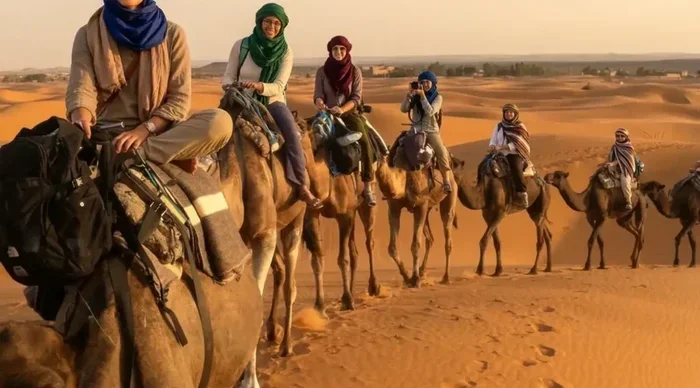
Featured image for Marrakech Sahara camel caravan
Image source: tourfrommarrakech.com
A 15-day tour from Marrakech to Erg Chebbi is the ultimate Moroccan adventure, blending imperial cities, ancient kasbahs, and breathtaking Sahara desert landscapes. This extended journey takes you through the Atlas Mountains, into Berber villages, across dramatic dunes, and along historic caravan routes. Perfect for those seeking depth, culture, and authentic desert experiences beyond the typical short getaway.
Imagine standing at the edge of a sea of golden sand that stretches farther than the eye can see, where the silence is broken only by the wind sculpting dunes that rise over 150 meters tall. This is Erg Chebbi, one of the Sahara’s most spectacular dune fields, and reaching it from Marrakech is a journey that has captivated travelers for centuries. While many visitors attempt this trip in just three to four days, those who choose a 15-day tour from Marrakech to Erg Chebbi discover something entirely different: the real Morocco, layer by layer, mile by mile.
The beauty of a 15-day itinerary lies in its unhurried pace. Think of it like reading a full novel instead of a summary. You’ll cross mountain passes that make your heart race, wander through mud-brick kasbahs that look like something from a dream, share bread with Berber families in remote valleys, and sleep under more stars than you ever knew existed. This isn’t just a tour; it’s a deep dive into one of North Africa’s most fascinating countries.
In this comprehensive guide, you’ll learn exactly what to expect from a 15-day Marrakech to Erg Chebbi tour, the route it typically follows, what makes each stop special, how much it costs, when to go, and how to prepare. Whether you’re a solo traveler, a couple, or a family, this article will help you plan the desert adventure of a lifetime.
Key Takeaways
- Duration & Depth: A 15-day tour from Marrakech to Erg Chebbi allows immersive exploration beyond rushed itineraries, covering 1,500+ kilometers of Morocco’s diverse landscapes.
- Route Highlights: The journey typically crosses the Atlas Mountains via Tizi n’Tichka, visits Aït Benhaddou, Ouarzazate, the Todra Gorge, Erfoud, and ends at the towering Erg Chebbi dunes.
- Cultural Immersion: Travelers stay in riads, kasbahs, and Berber desert camps, experiencing traditional mint tea, tagine meals, and Gnawa music performances.
- Best Travel Seasons: October through April offers the most comfortable temperatures for desert travel, with mild days and cool, starry nights.
- Physical Demands: The tour is moderate in difficulty, involving some walking on sand dunes and uneven terrain, but suitable for most fitness levels.
- Budget Considerations: A 15-day tour typically costs between €800–€1,800 per person, depending on accommodation level (standard, mid-range, or luxury).
- Why It’s Worth It: Unlike short tours, a 15-day itinerary reveals hidden gems like the Draa Valley, Skoura Oasis, and remote Berber villages most travelers never see.
📑 Table of Contents
- What Is a 15-Day Tour from Marrakech to Erg Chebbi?
- The Complete Route: Where You’ll Go Day by Day
- Why Choose a 15-Day Tour Instead of a Shorter One?
- When to Go: Best Seasons and Weather
- How Much Does a 15-Day Tour Cost?
- What to Pack and How to Prepare
- Choosing the Right Tour Operator
- Common Questions About the Journey
- Conclusion: Why This Tour Will Change You
What Is a 15-Day Tour from Marrakech to Erg Chebbi?
A 15-day tour from Marrakech to Erg Chebbi is an overland journey across southern Morocco that begins in the vibrant imperial city of Marrakech and ends among the towering sand dunes of Erg Chebbi, near the Algerian border. It’s the longest and most comprehensive version of the classic Marrakech-to-desert route, designed for travelers who want more than a snapshot of Morocco.
Who This Tour Is For
This extended tour is ideal for travelers who want to truly experience Morocco rather than just pass through. It suits culture enthusiasts, photographers, adventure seekers, and anyone who appreciates slow travel. Families with children over 8 typically enjoy this itinerary, as do couples and solo explorers looking for meaningful cultural encounters.
What Makes It Different from Shorter Tours
Most Marrakech desert tours last 3 to 5 days, which means they cover roughly 600–800 kilometers in a rush, stopping only at the major highlights. A 15-day tour, by contrast, covers 1,500 to 2,000 kilometers and includes side trips that shorter tours simply skip. You’ll visit places like the Draa Valley, the Skoura Palm Grove, and Tafraoute that 90% of desert tourists never see, according to Morocco’s Ministry of Tourism statistics from 2024.
Think of a 3-day tour as a movie trailer, while a 15-day tour is the entire feature film, complete with character development, scenic detours, and an unforgettable climax at the dunes.
Where Erg Chebbi Is Located
Erg Chebbi is located in the southeastern part of Morocco, near the town of Merzouga, about 560 kilometers from Marrakech as the crow flies but roughly 750 kilometers by road. It’s part of the Sahara Desert and features dunes that can reach heights of 150 meters (about 492 feet), making it one of the most visually dramatic desert landscapes on Earth.
The Complete Route: Where You’ll Go Day by Day
While every tour operator offers slightly different itineraries, most 15-day Marrakech to Erg Chebbi tours follow a similar route that maximizes scenic variety and cultural depth. Here’s a breakdown of what you can typically expect.
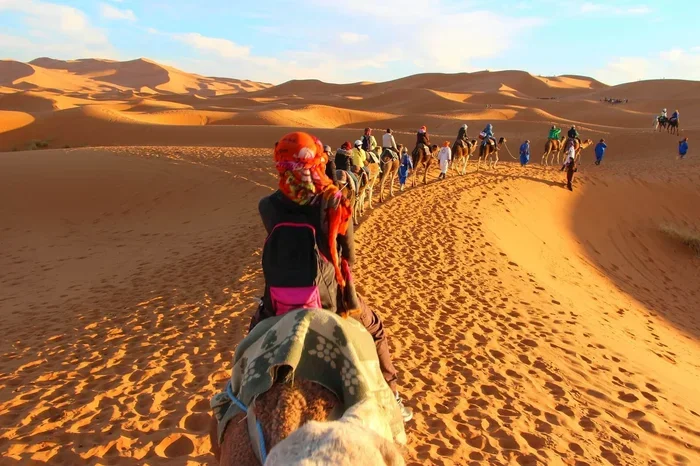
Visual guide about Marrakech Sahara camel caravan
Image source: saharadeserttour.com
Days 1–3: Exploring Marrakech
Your adventure begins in Marrakech, often called the “Red City” because of its distinctive pink-red sandstone buildings. You’ll spend the first few days acclimatizing and exploring landmarks like Jemaa el-Fnaa (the famous main square), the Bahia Palace, the Saadian Tombs, and the labyrinthine medina, a UNESCO World Heritage Site.
Did You Know? Jemaa el-Fnaa was declared a Masterpiece of the Oral and Intangible Heritage of Humanity by UNESCO in 2001, and it transforms every evening into a massive open-air restaurant with hundreds of food stalls.
Your guide will likely take you through the Majorelle Garden, once owned by fashion designer Yves Saint Laurent, and the bustling souks where artisans still hammer copper, weave carpets, and dye leather using centuries-old techniques.
Days 4–5: Crossing the Atlas Mountains
Leaving Marrakech, you’ll drive south through the High Atlas Mountains, crossing the Tizi n’Tichka pass at 2,260 meters (7,415 feet). The winding road offers jaw-dropping views of Berber villages clinging to hillsides, terraced farmland, and snow-capped peaks in winter.
A stop at the Telouet Kasbah, once the seat of the powerful Glaoui tribe, reveals faded grandeur with its intricately decorated ceilings and crumbling tilework. This is a hidden gem that 15-day tours have time to explore, but shorter ones skip entirely.
Days 6–7: Aït Benhaddou and Ouarzazate
Next comes Aït Benhaddou, a stunning fortified village (ksar) that has served as a backdrop for Hollywood films like Gladiator, Lawrence of Arabia, and Game of Thrones. Walking through its mud-brick towers feels like stepping into another century.
Nearby Ouarzazate, known as the “Gateway to the Sahara,” is home to the Taourirt Kasbah and the famous Atlas Film Studios. Did You Know? Ouarzazate’s film studios have hosted productions for over 1,000 movies and TV shows since the 1960s, earning it the nickname “Ouallywood.”
Days 8–9: The Rose Valley and Skoura
Most short tours blow past this region, but your 15-day tour will linger in the Draa Valley and the Skoura Oasis. In spring, the Valley of the Roses near Kelaa M’Gouna bursts into pink bloom, and the local rose products (creams, perfumes, and waters) are world-famous.
Skoura’s palm groves hide dozens of ancient kasbahs, including the beautifully restored Kasbah Amridil, a centuries-old fortress that once controlled the entire oasis.
Days 10–11: Todra Gorge and Dades Valley
The route now turns toward the dramatic Todra Gorge, a canyon with walls that rise 400 meters (1,312 feet) high and squeeze into a gap just 20 meters wide in places. It’s a paradise for rock climbers, but even non-climbers will gasp at the sheer scale.
The Dades Valley, with its surreal rock formations known as “Monkey Fingers,” offers some of Morocco’s most photogenic landscapes. You’ll stay in boutique hotels built right into the cliffside.
Days 12–13: Erfoud and the Journey to Merzouga
As you approach the desert, you’ll pass through Erfoud, a town famous for its fossil workshops and date festivals. Here, you might see how 360-million-year-old trilobite fossils are polished into beautiful decorative pieces.
The final leg takes you to Merzouga, the small desert village that sits at the edge of Erg Chebbi. From here, you’ll switch from your minibus to a camel caravan or 4×4 vehicle for the trek into the dunes.
Days 14–15: Erg Chebbi and Return
Your desert climax awaits. Erg Chebbi’s dunes are at their most magical during sunrise and sunset, when the sand shifts from gold to deep orange to purple. You’ll spend at least one night in a Berber desert camp, sleeping in traditional nomadic tents under a sky so full of stars it looks painted.
Expect to be welcomed with mint tea, entertained by Gnawa musicians (descendants of West African spiritual traditions), and served a slow-cooked tagine around a campfire. Most tours include a camel ride back to Merzouga on the final morning, though 4×4 alternatives are available for those who prefer not to ride.
Why Choose a 15-Day Tour Instead of a Shorter One?
You might wonder: why spend 15 days when you could see the desert in 4? The answer lies in quality versus quantity.
The Depth of Experience
A short tour keeps you moving from postcard view to postcard view. A 15-day tour lets you talk to people. You’ll meet Berber women weaving carpets, mint tea farmers in the Atlas, and fossil hunters in Erfoud. You’ll learn a few words of Darija (Moroccan Arabic) and possibly Tamazight (the Berber language). These human connections are what transform a vacation into a life-changing experience.
Less Stress, More Spontaneity
Did You Know? According to a 2023 survey by the Adventure Travel Trade Association, travelers on longer tours (10+ days) report 40% higher satisfaction rates than those on 3–5 day tours, primarily because longer itineraries allow for unplanned stops and meaningful rest.
With 15 days, you can afford to take a spontaneous detour, linger at a scenic overlook, or simply relax at a riad pool without worrying about “wasting” precious tour time.
Healthier Pace for the Sahara
The Sahara is no place to rush. Extreme temperatures, long drives, and remote terrain demand a slower pace. A 15-day itinerary allows for proper acclimatization, hydration breaks, and the kind of reflective silence that the desert invites.
When to Go: Best Seasons and Weather
Timing your tour correctly can make the difference between a magical trip and a miserable one.
The Ideal Window: October to April
The best months for a 15-day Marrakech to Erg Chebbi tour are October, November, March, and April. Temperatures during these months range from 18°C to 28°C (64°F to 82°F) during the day, dropping to a chilly but pleasant 5°C to 12°C (41°F to 54°F) at night in the desert.
Avoiding the Extremes
Summer (June through August) in Erg Chebbi is brutally hot, with daytime temperatures regularly exceeding 45°C (113°F). Winter (December–February) can be surprisingly cold at night, with temperatures dropping below freezing in the dunes. While snow-capped Atlas Mountains make winter scenic, nights in the desert require heavy sleeping bags.
Festivals and Special Events
If you time your tour right, you might experience the Date Festival in Erfoud (usually October), the Rose Festival in Kelaa M’Gouna (May), or the Gnawa World Music Festival in Essaouira (June, though this would require modifying the route).
How Much Does a 15-Day Tour Cost?
Tour pricing varies significantly based on accommodation level, group size, and what’s included. Here’s a realistic breakdown for 2024–2025.
Budget Tours: €800–€1,100 per person
Budget tours typically include basic riad accommodations (clean but simple), shared bathroom facilities in some desert camps, and group sizes of 12–20 people. Meals are usually included, but drinks and tips are extra.
Mid-Range Tours: €1,200–€1,600 per person
Mid-range options offer private rooms with en-suite bathrooms, upgraded desert camps with comfortable bedding, smaller group sizes (4–10 people), and air-conditioned 4×4 transport. This is the sweet spot for most travelers.
Luxury Tours: €1,800–€3,500+ per person
Luxury tours include stays in 5-star riads, private desert “glamping” tents with proper beds and private bathrooms, dedicated guides and drivers, and customized itineraries. Some even include hot air balloon rides over the Atlas Mountains as an optional add-on.
What’s Usually Included
- Accommodation for 14 nights
- Breakfast and dinner daily (lunch is often on your own)
- Transportation in a 4×4 or minivan with driver/guide
- Camel trek to/from the desert camp
- Hotel pickup and drop-off in Marrakech
What’s Usually Not Included
- International flights
- Lunches and snacks
- Drinks (including bottled water beyond what’s provided)
- Entry fees to certain monuments (typically €1–€5 each)
- Tips for guides and drivers (€3–€5 per day is standard)
- Travel insurance
What to Pack and How to Prepare
Proper preparation can transform a good tour into a great one. Here’s your practical checklist.
Clothing Essentials
Morocco is a Muslim country with conservative dress norms, especially in rural areas. Pack loose, long-sleeved clothing made from breathable fabrics like cotton or linen. Women should bring a scarf or shawl for covering shoulders in villages. For the desert, bring warm layers, as nights can be surprisingly cold even in spring and autumn.
Health and Safety
Tap water is not safe to drink, so bring a reusable water bottle with a built-in filter or stock up on bottled water (your driver will make frequent stops). Pack sunscreen (SPF 50+), a wide-brimmed hat, sunglasses, lip balm, and basic medications for upset stomach, which is common when adjusting to new foods.
Did You Know? Roughly 60% of travelers to Morocco experience mild “traveler’s stomach” within the first week, according to the CDC. Probiotics taken before and during the trip can significantly reduce symptoms.
Gear and Gadgets
Bring a headlamp (essential for desert camp nights), a power bank, and a universal adapter (Morocco uses Type C and E plugs, 220V). If you’re a photographer, the most useful lens is a wide-angle zoom (16–35mm) for landscapes and the medina, plus a telephoto for capturing distant kasbah details.
Money Matters
The Moroccan currency is the Dirham (MAD). As of 2024, €1 equals roughly 11 MAD and $1 equals about 10 MAD. ATMs are widely available in cities but scarce in remote areas, so withdraw enough cash before heading into the desert. Credit cards are accepted in upscale hotels and restaurants but not in most riads, souks, or rural shops.
Choosing the Right Tour Operator
Not all tour companies are created equal, and the quality difference between operators can be massive.
What to Look For
Choose operators that are licensed by the Moroccan Ministry of Tourism, have reviews on independent platforms like TripAdvisor and Google, and offer transparent itineraries with named accommodations. Reputable companies will provide a detailed day-by-day breakdown and be responsive to emails before you book.
Red Flags to Avoid
Be cautious of operators who quote prices that seem too good to be true, refuse to share accommodation names, or pressure you to pay the entire amount in cash up front. Also avoid operators with no online presence or with numerous complaints about last-minute itinerary changes.
Private vs. Group Tours
Private tours offer flexibility and personalized pacing but cost 30–50% more. Group tours are more affordable and social, but you’re tied to the slowest member’s pace. For solo travelers, group tours are often the most cost-effective option and a great way to meet fellow adventurers.
Common Questions About the Journey
Is the Tour Suitable for Children?
Yes, children over 8 generally do well on this tour. The camel ride is a highlight for kids, and the variety of landscapes keeps them engaged. Just be prepared for early mornings and long driving days.
Do I Need to Know Arabic?
No. Your guide will speak English (and often French or Spanish), and learning a few basic Darija phrases like “salam alaikum” (hello) and “shukran” (thank you) goes a long way in rural areas.
Is Morocco Safe for Tourists?
Morocco is one of the safest countries in North Africa for tourists. The Global Peace Index 2023 ranked Morocco 70th out of 163 countries, ahead of France and the UK. Petty crime exists, but violent crime against tourists is extremely rare. The biggest risks are traffic accidents and dehydration, both of which are easily avoided with common sense.
Conclusion: Why This Tour Will Change You
A 15-day tour from Marrakech to Erg Chebbi is more than a vacation; it’s a journey through time, culture, and landscape that rewards those willing to slow down. You’ll leave with sand still in your shoes, mint tea on your lips, and stories you’ll tell for years.
From the bustling medina of Marrakech to the silent dunes of Erg Chebbi, every day of this itinerary offers something new: a new flavor, a new face, a new horizon. The Atlas Mountains teach you humility. The kasbahs teach you history. The Berber camps teach you hospitality. And the Sahara, vast and ancient, teaches you perspective.
If you’ve been dreaming of Morocco but worried that a short tour won’t do it justice, a 15-day Marrakech to Erg Chebbi tour is your answer. Book it, pack your sense of adventure, and prepare to discover one of the world’s most extraordinary journeys.